Personalized Medical Care & Dedicated International Patient Concierge

Dental Implants · Needs Clinic Confirmation
Navigation-Guided Implant Surgery
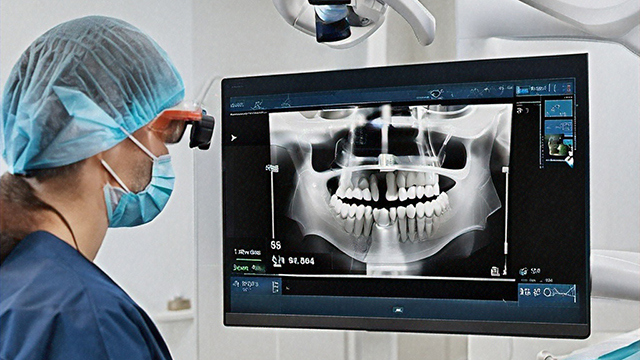
Navigation-guided implant surgery uses computer-assisted 3D imaging to guide the precise placement of an implant fixture during surgery, rather than relying solely on the surgeon's direct visual judgment.
Schedule a ConsultationWhat Is Navigation-Guided Implant Surgery?
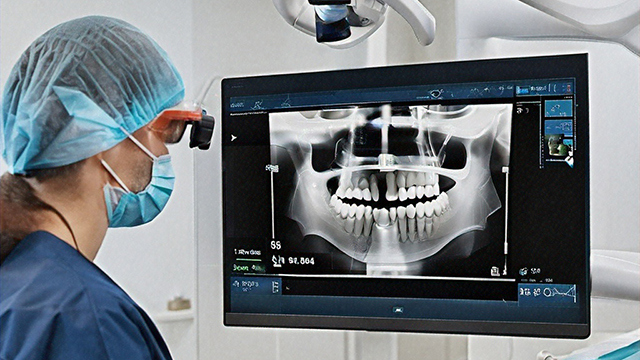
Navigation-guided implant surgery uses computer-assisted 3D imaging to guide the precise placement of an implant fixture during surgery, rather than relying solely on the surgeon's direct visual judgment. Before treatment, detailed imaging maps the patient's bone structure, nerve pathways, and sinus position; during the procedure, this digital map helps guide the angle, depth, and position of the implant in real time.
Harue Dental Clinic has been performing this type of guided implant surgery since 2002, and in 2007 registered the technique as "Navigation Implant" with the Korean Intellectual Property Office (Application No. 41-2007-0021759). This is not a recently adopted trend at the clinic — it reflects a technique refined over more than two decades of direct clinical use by Dr. Hanna Lee.
Who Is a Candidate for Navigation-Guided Implant Surgery?
Navigation-guided implant surgery may be particularly relevant for patients in situations such as:
- Implant placement near anatomically sensitive structures, such as nerve pathways or the maxillary sinus
- Cases involving limited bone volume where precise angulation and depth control matter more than usual
- Patients who have had prior implant complications and want a more closely guided surgical approach
- Multiple-implant cases where consistent positioning across several sites is clinically important
- Patients who want a clear, imaging-based explanation of exactly where and how their implant will be placed before surgery
- Adults evaluating implant options who are specifically interested in computer-assisted, rather than purely freehand, surgical technique
- Cases in the posterior jaw, where anatomical margins for error are often narrower than in more visible anterior sites
Meet the Specialist

Dr. Hanna Lee
Dentist, Ph.D. Candidate
Dr. Hanna Lee, D.D.S., has personally performed navigation-guided implant surgery at Harue Dental Clinic since 2002, bringing more than 30 years of overall experience in implantology and aesthetic dentistry to this precision-focused technique. She is recognized as the highest-volume provider of German Ankylos implant procedures in Korea and across Asia and serves as an Advisory Physician for the Ankylos Implant System — a role that reflects extensive hands-on familiarity with matching guided surgical planning to a specific implant platform's requirements.
Dr. Lee's development and 2007 trademark registration of the "Navigation Implant" technique with the Korean Intellectual Property Office reflects a long-standing clinical commitment to precision-based surgical planning, rather than a recently adopted marketing feature. Her broader treatment philosophy — applying index-guided, minimally invasive technique across all implant cases — extends directly into how navigation guidance is used during surgery: as a tool to protect surrounding bone and soft tissue by minimizing surgical guesswork, not as an add-on service.
Navigation-Guided Implant Surgery: What's Involved and Expected Improvements
- Pre-surgical 3D mapping: Before surgery, detailed 3D imaging captures the patient's bone structure, nerve pathways, and relevant anatomical landmarks at the implant site. This mapping forms the digital plan that guides the surgery itself.
- Real-time surgical guidance: During placement, the navigation system helps guide implant angulation, depth, and position according to the pre-surgical plan, reducing reliance on estimation during the procedure.
- Precision near sensitive anatomy: In sites close to nerve pathways or the sinus cavity, navigation guidance is particularly relevant for maintaining safe distance and accurate positioning, which can be more difficult to judge with freehand technique alone.
- Consistency across multiple implants: In cases requiring more than one implant, navigation guidance helps maintain consistent angulation and spacing across sites, which supports more predictable restoration planning afterward.
Individual surgical outcomes depend on bone quality, anatomical complexity, and overall oral health, and results vary by patient. No specific surgical outcome can be guaranteed regardless of the guidance technology used.
Treatment Process and Timeline
- Consultation and 3D Imaging — Dr. Lee reviews detailed 3D imaging of the implant site, mapping bone structure and relevant anatomical landmarks such as nerves and sinus position.
- Digital Surgical Planning — A navigation plan is created based on the imaging, determining the intended angulation, depth, and position for each implant.
- Navigation-Guided Implant Placement — The implant is placed during surgery with real-time reference to the digital plan, following Dr. Lee's index-guided, minimally invasive approach.
- Immediate Post-Surgical Care — Patients receive guidance on managing any swelling or discomfort in the days immediately following the procedure.
- Healing and Osseointegration — The implant integrates with the surrounding bone over a period that varies by individual healing response.
- Restoration Planning and Follow-Up — Once integration is confirmed, restoration proceeds using the clinic's in-house digital design and fabrication process, followed by a review appointment.
Some mild swelling or discomfort in the days following surgery is common with implant placement generally; specific downtime expectations will be reviewed with Dr. Lee based on the complexity of your case.
Results, Safety, and Longevity
Navigation-guided implant surgery is intended to improve the precision and predictability of implant placement, particularly in anatomically complex cases, but it does not change the fundamental biological healing process an implant undergoes once placed. Longevity depends on the same factors relevant to any implant: ongoing oral hygiene, regular follow-up care, and individual bone and gum health over time.
As with any implant procedure, risks including infection, delayed healing, or implant failure requiring further intervention remain possible, though precise guided placement is intended to reduce certain surgical risks associated with freehand estimation near sensitive anatomy. Serious complications are uncommon but possible, and Dr. Lee reviews the specific risk profile for each case individually rather than presenting navigation guidance as eliminating risk altogether.
Why Choose Harue Dental Clinic for Navigation-Guided Implant Surgery?
Harue Dental Clinic's navigation-guided implant technique isn't a recently added feature — it's a registered, trademarked approach that Dr. Lee has used and refined since 2002, backed by official registration with the Korean Intellectual Property Office in 2007. That history matters for a technique built on precision: two decades of direct clinical use behind the same guided approach offers a different level of familiarity than a newly adopted system.
- Over 20 years of direct clinical experience with navigation-guided implant technique, officially trademarked as "Navigation Implant" in 2007
- Advisory-level familiarity with the Ankylos implant system, allowing surgical navigation planning to be closely matched to the specific implant platform used
- Precision-focused approach to anatomically complex cases, including sites near nerve pathways or sinus structures
- Transparent, dentist-led consultation and planning, conducted personally by Dr. Lee in a calm, private clinical setting suited to international and English-speaking patients
Real Patient Examples
A patient in their 50s required an implant in a posterior site close to a nerve pathway and was concerned about surgical precision in that area. Navigation-guided planning allowed Dr. Lee to map the exact implant position relative to the nerve before surgery began.
A patient in their early 40s needed multiple implants placed across the same quadrant and wanted consistent spacing and angulation to support a stable final restoration. Navigation guidance helped maintain that consistency across each implant site during surgery. Individual results vary, and these examples are illustrative rather than representative of a guaranteed outcome for any specific patient.
Ready for Implant Surgery Guided by Two Decades of Precision Technique?
Implant placement in anatomically complex sites deserves more than an estimate — it deserves a surgical plan mapped in advance and followed with real-time precision. At Harue Dental Clinic, Dr. Hanna Lee has performed navigation-guided implant surgery since 2002, using a technique the clinic officially trademarked in 2007, to bring a higher degree of predictability to implant placement near sensitive anatomical structures.
[Schedule Your Navigation-Guided Implant Consultation] — Speak directly with Dr. Lee's team to review your case with detailed 3D imaging, understand exactly how navigation guidance would be applied to your specific implant site, and receive a transparent treatment plan and cost breakdown before any decision is made.
Other Services
Explore additional treatments offered by our specialists.