Personalized Medical Care & Dedicated International Patient Concierge

Medical Guide
Who Is Not a Candidate for Same-Day Full-Arch Implants?
Learn who is not a candidate for same-day full-arch implants, including bone support, primary stability, active gum infection, and systemic risk factors.
Schedule a ConsultationWho Is Not a Candidate for Same-Day Full-Arch Implants? Bone, Infection and Stability Factors
Medically reviewed by Dr. Hanna Lee, DDS, MSD, PhD
The Bottom Line
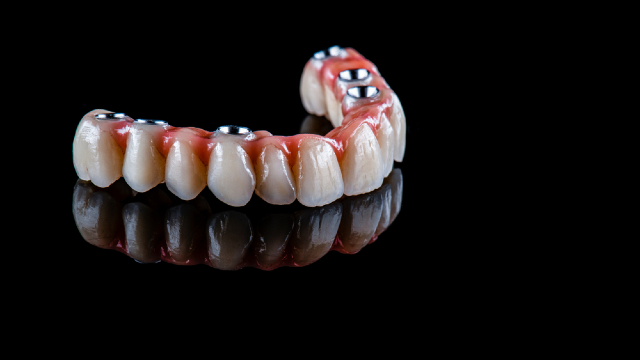
- Not every edentulous or failing dentition qualifies for immediate loading: While same-day full-arch protocols allow many patients to leave surgery with a fixed provisional bridge, individuals with insufficient jawbone volume, inadequate primary mechanical fixation, active oral infection, or uncontrolled systemic illness are routinely advised to wait for a staged approach.
- Primary mechanical stability is determined on the day of surgery: Preoperative 3D cone-beam computed tomography (CBCT) maps anatomical bone volume, but the final decision to attach a same-day bridge depends on whether each titanium fixture achieves firm mechanical grip in the jawbone at placement.
- Active periodontal infection and uncontrolled systemic disease must be stabilized first: Placing and immediately loading implants in sites with acute suppuration, untreated severe periodontitis, or poorly controlled metabolic conditions increases the risk of early fibrous encapsulation and fixture loss.
- Being told to wait does not mean permanent disqualification: Most patients who are not immediate candidates for same-day loading can still achieve a fixed full-arch restoration through a conventional two-stage protocol, preparatory bone grafting, or targeted periodontal stabilization.
- Clinical transparency protects international travelers: At Harue Dental Clinic in Gangnam-gu, Seoul, Dr. Hanna Lee evaluates every patient using 3D CT diagnostics and navigation-guided planning so that overseas travelers understand before flying whether their anatomy favors immediate loading or a staged healing schedule.
Why Candidacy Screening Matters More Than Marketing Promises
Patients researching full-mouth rehabilitation online frequently encounter advertisements suggesting that anyone with missing or failing teeth can walk into a clinic in the morning and leave that afternoon with a fixed arch of teeth. When patients ask, "am I a candidate for all on 4" or search for who is not a candidate for immediate loading implants, they are often looking for the clinical boundaries that promotional brochures leave out.
Same-day full-arch restoration—whether configured on four implants (All-on-4) or six implants (All-on-6)—is a biomechanically demanding procedure. Unlike conventional implant protocols that leave titanium fixtures buried beneath the gum tissue for two to three months to fuse with the bone undisturbed, immediate loading places functional forces on the implants the very day they are inserted. For that early phase to succeed, the bone, soft tissue, implant geometry, and prosthetic design must work together to keep microscopic movement of the fixtures below biological thresholds while living bone cells remodel around the titanium threads.
At Harue Dental Clinic, located at 41-11, Gangnam-daero 162-gil, Gangnam-gu, Seoul (Sinsa-dong, Harue Dental Clinic Building), full-arch rehabilitation has been a core clinical focus for more than two decades. Founded in 1995 and led by Director Dr. Hanna Lee—who holds DDS, MSD, and PhD degrees from The Catholic University of Korea Graduate School of Dentistry, serves there as an Adjunct Professor in the Department of Implant Dentistry, and has placed 90,696 cumulative dental implants including more than 3,000 full-arch cases as of September 2025—the clinic began performing immediate-loading full-arch implant treatments in 2000. Across more than 20 years of immediate-loading practice, one principle has remained constant: knowing when not to load an arch on day one is just as important as knowing how to execute the procedure when conditions are favorable.
Understanding full arch implant candidacy before booking international flights to South Korea helps U.S. patients set realistic expectations, plan appropriate trip durations, and recognize why a clinician who recommends a staged healing protocol is prioritizing long-term fixture survival over convenience.
Core Exclusion Factors: Who Is Told to Wait for Same-Day Loading?
When evaluating same day teeth eligibility, an experienced implant surgeon examines four foundational domains: structural jawbone support, intraoperative primary mechanical fixation, local oral microbiological health, and systemic medical resilience. A significant deficiency in any one of these four pillars is grounds to defer immediate loading in favor of a staged protocol.
| Evaluation Pillar | Favorable for Same-Day Full-Arch Loading | Contraindicated for Immediate Loading (Told to Wait) | Recommended Clinical Alternative |
|---|---|---|---|
Jawbone Volume & Density (bone support requirements implants) |
Sufficient cortical and cancellous bone volume across anterior and tilted posterior trajectories to house 4 to 6 fixtures without dehiscence. | Severe horizontal or vertical ridge atrophy, paper-thin basal cortical plates, or extensive cavitary defects leaving implants without circumferential bony walls. | Preparatory ridge augmentation, sinus floor elevation, or staged fixture placement with submerged healing for 2–3 months. |
Primary Mechanical Fixation (initial implant stability) |
Firm mechanical locking of implants at insertion, allowing cross-arch splinting via a bilateral load-balance provisional bridge. | Low insertion resistance in soft trabecular bone ("spinner" fixtures) where early occlusal forces would cause excessive micromotion. | Two-stage submerged protocol using a protective healing cap and a relieved removable provisional until osseointegration is verified. |
Oral Infection & Periodontal Status (uncontrolled gum disease implants) |
Absence of acute purulent drainage; chronic periodontal sites can be thoroughly debrided and decontaminated at extraction. | Active cellulitis, acute periapical abscesses with widespread osteolysis, or uncontrolled necrotizing periodontal infection across the arch. | Extraction, surgical debridement, targeted antimicrobial therapy, and soft-tissue/bony resolution prior to implant insertion. |
Systemic Health & Behavioral Factors (medical conditions and implants) |
Controlled chronic conditions (e.g., well-managed blood glucose, medically cleared cardiovascular status) and ability to follow a soft-bite diet. | Uncontrolled diabetes mellitus, recent high-dose antiresorptive/radiation therapy to the jaws, heavy smoking, or inability to comply with a 2–3 month restricted chewing protocol. | Medical optimization with the patient's physician, smoking cessation, and delayed loading after confirmed biological integration. |
Factor 1: Insufficient Bone Support and Anatomical Constraints
A common misconception about All-on-4 and All-on-6 concepts is that tilted posterior implants completely eliminate the need for bone. While angling the posterior fixtures avoids the maxillary sinus cavities in the upper jaw and the mental foramen in the lower jaw—often bypassing bone grafting in patients with moderate posterior resorption—the implants still require a minimum envelope of healthy basal bone.
Understanding Bone Support Requirements for Implants
Evaluating bone support requirements implants involves both bone quantity (three-dimensional height, width, and trajectory length) and bone quality (the ratio of dense outer cortical bone to spongy inner trabecular bone).
- Severe Residual Ridge Resorption: Patients who have worn ill-fitting conventional dentures for decades or who have lost extensive alveolar bone to long-standing periodontal breakdown may have extreme vertical and horizontal atrophy. If the residual ridge is too narrow or shallow to surround the titanium threads of four or six Ankylos implants—even when tilted—placing and loading a fixed bridge on the same day carries an unacceptably high risk of cortical plate fracture or thread exposure.
- Upper vs. Lower Jaw Bone Density Differences: The anterior mandible typically possesses dense cortical walls that favor strong mechanical engagement. By contrast, the posterior maxilla frequently consists of low-density, finely trabeculated cancellous bone beneath a thin sinus floor. As highlighted in a retrospective cohort study by Gohil et al. (2026) examining All-on-4 full-arch implant-supported prostheses in completely edentulous arches, achieving predictable full-arch survival depends heavily on careful anatomical selection and prosthetic load distribution across the supporting bone.
- Impacted Teeth, Large Cysts, or Residual Defects: When preoperative 3D CT imaging reveals large radicular cysts, deeply impacted teeth along the planned osteotomy trajectories, or fresh extraction sockets that leave huge bony voids after curettage, there may not be enough intact native bone left to anchor four fixtures simultaneously. A 5-year clinical case report by Todorovic et al. (2026) notes that complex anatomical obstacles—such as impacted maxillary canines lying directly in planned full-arch trajectories, especially when combined with advanced periodontitis, bruxism, and heavy tobacco use—require highly individualized cone-beam computed tomography planning rather than routine one-size-fits-all protocols.
When Harue Dental Clinic identifies insufficient bone volume on 3D CT imaging, Dr. Hanna Lee explains clearly whether navigation-guided trajectory adjustments can engage available native bone or whether bone augmentation and a staged healing interval are required first.
Factor 2: Inadequate Initial Implant Stability on Surgery Day
Even when a preoperative 3D CT scan shows seemingly adequate bone dimensions, the definitive test for immediate loading occurs inside the operating room during implant insertion. This biomechanical requirement is known as initial implant stability (or primary stability).
The Biomechanics of Micromotion vs. Osseointegration
When a dental implant is first placed into a prepared osteotomy, there is zero biological bond between the titanium surface and the patient's bone. Instead, stability during the first weeks is purely mechanical, created by the frictional compression of the implant threads against the surrounding cortical and trabecular bone walls. Over the ensuing two to three months, osteoclasts resorb the compressed bone edges while osteoblasts lay down new woven and lamellar bone directly onto the implant surface—a biological process termed osseointegration.
During the transition between mechanical stability diminishing (around weeks two through four) and secondary biological stability rising, the bone-implant interface is vulnerable to movement:
- Acceptable Micro-Strain: When implants achieve firm initial mechanical fixation and are rigidly connected across the arch by a well-balanced provisional prosthesis, microscopic movement under gentle functional forces remains below the threshold that disrupts bone-forming cells.
- Excessive Micromotion: If one or more fixtures lack adequate primary fixation—felt by the surgeon as low rotational resistance during insertion—chewing forces transmitted through a same-day bridge cause the implant to rock within its socket. Rather than forming calcified bone around the threads, the body walls off the moving titanium fixture with soft fibrous scar tissue (fibrous encapsulation), resulting in early implant failure.
A comparative clinical analysis by Dev et al. (2026) investigating buccal and lingual bone thicknesses following immediate versus delayed loading of mandibular implants underscores that peri-implant cortical bone preservation and remodeling are closely tied to the loading protocol selected and the initial local bone environment.
How Harue Dental Clinic Evaluates and Protects Primary Stability
Since introducing navigation-guided implant surgery in 2002—and registering "Navigation Implant" with the Korean Intellectual Property Office in 2007—Harue Dental Clinic has combined three technical safeguards to maximize and verify primary fixation:
- Navigation-Guided Osteotomy Preparation: Using 3D CT data, each implant position, angle, and depth is planned in relation to dense cortical zones, sinus boundaries, and the inferior alveolar nerve before surgery begins.
- Index-Guided Placement and the Bilateral Load-Balance Protocol: When primary stability meets clinical criteria across the arch, Dr. Lee utilizes index-guided positioning and a bilateral load-balance protocol. Connecting the four or six Ankylos implants across both the left and right sides of the jaw with a precision-milled temporary fixed prosthesis splints the fixtures together so that biting loads are shared symmetrically rather than concentrated on a single implant.
- Intraoperative Readiness to Pivot to Staged Healing: If tactile surgical assessment and stability testing reveal that the jawbone is softer than anticipated and cannot support immediate loading safely, the ethical clinical decision is to place submerged healing components rather than forcing a same-day fixed bridge onto unstable fixtures.
Factor 3: Uncontrolled Oral Infection and Active Periodontal Disease
Many patients seeking full-arch rehabilitation are transitioning from a failing natural dentition affected by severe gum disease, decayed roots, or recurrent dental abscesses. A frequent question is how uncontrolled gum disease implants interact when teeth are extracted and implants are placed in the same visit.
Chronic Periodontitis vs. Acute Uncontrolled Infection
Not all gum disease prevents immediate implant placement, but the activity, extent, and microbiological load of the infection dictate whether immediate loading is safe:
- Manageable Periodontal Breakdown: When failing teeth have chronic periodontal bone loss without acute purulent swelling, the teeth can often be extracted, the granulation tissue thoroughly curetted from the sockets, and the implants placed into deeper, uninvolved basal bone during the same appointment—provided the clinic follows rigorous surgical decontamination.
- Uncontrolled Acute Infection (Exclusion from Same-Day Loading): Patients presenting with acute suppurative abscesses, spreading facial or mucosal cellulitis, osteomyelitis, or generalized necrotizing periodontal breakdown across the planned implant sites are not candidates for immediate same-day loading. Placing titanium fixtures directly into acutely infected, acidotic bone compromises both initial mechanical grip and early bone remodeling.
The Microbial Link Between Periodontitis and Peri-Implantitis
Even after natural teeth are removed, oral bacteria residing in the soft tissues, tongue dorsum, and remaining pockets can colonize newly placed implant abutments. In a cross-sectional quantitative PCR study, Suciu et al. (2026) analyzed subgingival microbial profiles at peri-implant sites and demonstrated that pathogenic biofilm accumulation drives inflammatory destruction of the supporting soft and hard tissues, leading to progressive marginal bone loss. Similarly, a 10-year clinical study by Teles et al. (2026) evaluating implants in long-term function emphasized that pre-existing periodontal disease patterns and ongoing plaque control remain major determinants of peri-implant tissue health over a decade or more.
At Harue Dental Clinic, infection control is addressed at two levels:
- Pre-Surgical Periodontal Stabilization: If a patient presents with severe active gum inflammation or purulent infection, periodontal therapy, tooth extraction, and socket debridement are performed first, allowing the oral mucosa and underlying bone to resolve before fixtures are loaded.
- 19-Step Infection-Control System: During all surgical and restorative procedures, the clinic enforces a structured 19-step sterilization and infection-control protocol designed to prevent cross-contamination in the surgical field.
Factor 4: Medical Conditions, Medications, and Occlusal Force Risks
Evaluating medical conditions and implants is essential because osseointegration is an active wound-healing process that relies on healthy microvascular blood flow, balanced bone turnover, and immune competence. Even if a patient's jawbone volume appears sufficient on a 3D CT scan, systemic health factors or severe functional habits can disqualify them from immediate loading.
Systemic Conditions Requiring Caution or Deferral
- Uncontrolled Diabetes Mellitus: Persistently elevated blood glucose impairs neutrophil function, reduces microvascular circulation in the gingiva and alveolar bone, and delays collagen synthesis and osteoblast differentiation. A systematic review by Shahi et al. (2026) evaluating dental implant outcomes in patients with diabetes mellitus confirmed that glycemic control plays a decisive role in peri-implant health and bone maintenance: while patients with well-controlled diabetes can achieve favorable implant survival, poorly controlled hyperglycemia increases biological complications and compromises healing. Patients with uncontrolled HbA1c levels are advised to stabilize their metabolic status with their physician—and often follow a conventional delayed loading timeline—rather than undergoing immediate full-arch loading.
- Heavy Tobacco and Nicotine Use: Smoking causes peripheral vasoconstriction, reduces oxygen tension in healing surgical flaps, and alters bone mineral density. When combined with immediate functional loading, heavy tobacco consumption elevates the risk of early crestal bone loss and wound dehiscence.
- Bone-Modifying Medications and Head/Neck Radiation: Intravenous bisphosphonates, denosumab therapy, or prior therapeutic radiation to the maxillofacial region suppress normal bone remodeling and vascularity, creating a risk of medication-related osteonecrosis of the jaw (MRONJ) or osteoradionecrosis.
- Uncontrolled Cardiovascular Disease, Coagulopathies, or Immunosuppression: Unstable hypertension, recent myocardial infarction, unmanaged anticoagulant therapy, or active immunosuppressive treatment must be evaluated and cleared with the patient's medical physician before any full-arch surgery is scheduled.
Behavioral and Occlusal Contraindications: The 2–3 Month Soft-Bite Rule
Immediate loading does not mean immediate unrestricted chewing. At Harue Dental Clinic, patients who receive a same-day temporary fixed prosthesis under the bilateral load-balance protocol must strictly follow a guided healing regimen for approximately 2–3 months:
- During this 2–3 month integration window, patients must avoid excessive biting forces, hard or crunchy foods, and tearing motions on the provisional bridge.
- Patients with severe, unmanaged sleep or awake bruxism (heavy clenching and tooth grinding) who cannot control parafunctional overload—or patients who cannot adhere to dietary restrictions and rigorous oral hygiene—face a high risk of loosening an immediately loaded implant before bone fusion is complete. In such cases, keeping the implants unloaded beneath the gum tissue during initial healing provides a safer margin against mechanical overload.
What Happens If You Are Not a Candidate for Same-Day Loading?
Being told that you are not an immediate candidate for same-day teeth is not the end of your restorative journey. Instead, it redirects your treatment into a predictable, biologically respectful pathway. Depending on the specific exclusion factor identified during your 3D CT and clinical evaluation, Dr. Hanna Lee may recommend one of three approaches:
1. Conventional Two-Stage (Delayed Loading) Full-Arch Implants
If four or six Ankylos implants can be placed into native bone but one or more fixtures do not achieve enough primary mechanical torque for immediate loading—or if systemic healing factors warrant extra protection—the implants are placed and left to heal submerged for approximately 2–3 months. Once secondary osseointegration is confirmed, the implants are uncovered and restored with the prosthetic bridge.
2. Preparatory Bone Grafting or Infection Resolution Followed by Implants
When active periapical infection, severe periodontal inflammation, or major bony defects prevent immediate fixture stability, the initial phase focuses on tooth extraction, thorough debridement, and bone augmentation where indicated. After the grafted bone matures, navigation-guided implant placement proceeds on a stable foundation. Overall full-arch treatment timelines at Harue typically span 3–6 months (or roughly 4 visits over 4–6 months depending on healing and restoration stages).
3. Alternative Prosthetic Options
For patients whose systemic medical status permanently contraindicates oral surgery, traditional removable dentures remain a non-surgical option for restoring basic appearance and chewing function.
| Clinical Scenario | Phase 1 (Initial Visit in Seoul) | Healing Interval | Phase 2 (Final Restoration) |
|---|---|---|---|
| Immediate-Loading Candidate (All-on-4 / All-on-6) | 3D CT scan, navigation-guided placement of 4–6 Ankylos implants, index-guided bilateral load-balance temporary fixed prosthesis (typical stay: 7–14 days). | 2–3 months of guided osseointegration with strict soft-bite force precautions. | Verification of bone integration and fabrication/delivery of final zirconia full-arch restoration (3–6 months total timeline). |
| Staged / Delayed-Loading Candidate (Low Primary Stability) | 3D CT scan, navigation-guided implant placement, submerged healing caps, and relieved provisional denture so implants bear zero direct load. | 2–3 months (or longer if bone grafting is performed) of undisturbed biological bone fusion. | Second-stage uncovering, digital scanning with PrimeScan/Omnicam, and final full-arch prosthetic delivery. |
| Active Infection or Severe Bone Deficiency | Extraction of infected teeth, surgical debridement, periodontal stabilization, and ridge/sinus bone grafting as needed. | Several months of graft consolidation and mucosal maturation before or after fixture insertion. | Staged navigation-guided implant placement and final CAD/CAM prosthetic rehabilitation. |
How International Patients Can Pre-Screen Before Flying to Seoul
For U.S. patients considering treatment in South Korea, discovering after landing at Incheon International Airport (ICN) that you need a staged two-trip plan instead of a same-day provisional bridge can disrupt flights, hotel bookings, and work leave. Harue Dental Clinic structures its international inquiry workflow to minimize surprises before you travel:
- Pre-Travel Records Review: Before booking flights, you can send recent panoramic X-rays, local CBCT files, medical history, and current medication lists to our international patient team via our contact page, email (
info@haruedentalclinic.com), phone (+82 2 543 0037), WhatsApp (+1 208-825-7756), or Line (@737sevbt). - Preliminary Assessment with English-Speaking Coordination: International Coordinator Jeon Jin-mi and the clinic's English-speaking coordination team review your submission with Dr. Hanna Lee to flag obvious anatomical or medical contraindications early. (Patients are encouraged to confirm English-speaking coordinator availability in advance when scheduling specific appointment dates.)
- In-Person 3D CT and 30–60 Minute Consultation in Gangnam: Because radiographic files sent from abroad cannot measure intraoperative bone density or active gingival suppuration, definitive candidacy for same-day loading is confirmed during a 30–60 minute in-person diagnostic consultation at our Sinsa-dong facility using on-site 3D CT imaging and intraoral digital scanning (supported by 17 digital scanning units—5 PrimeScans and 12 Omnicams—and 24 in-house milling units). You can also review real patient outcomes in our before-and-after gallery and patient reviews.
Frequently Asked Questions
Am I a candidate for All-on-4 if I have been told I have bone loss?
Many patients with moderate posterior jawbone loss still qualify for All-on-4 or All-on-6 because tilting the rear implants engages denser anterior bone while bypassing the sinus cavity or mental nerve. However, if bone loss is so severe across the entire arch that implants cannot achieve firm mechanical grip, preparatory bone grafting or a staged healing protocol is required before loading.
Why can't every full-arch implant case receive fixed teeth on the same day?
Same-day loading requires each titanium implant to lock tightly into the jawbone at placement so that connecting them with a temporary bridge keeps microscopic movement below biological limits. If the bone is soft, thin, or compromised by active infection, immediate biting forces will cause the implants to move and fail to fuse with the bone.
Can I get immediate-load implants if my teeth are failing from gum disease?
Chronic gum disease around failing teeth does not automatically rule out immediate placement if the infected tissue can be completely removed at extraction and healthy basal bone remains deeper in the jaw. However, acute purulent abscesses, spreading mucosal infection, or uncontrolled inflammation require infection resolution before implants are placed and loaded.
How does diabetes or smoking affect full-arch implant candidacy?
Uncontrolled diabetes and heavy tobacco use impair blood circulation, immune defense, and bone cell activity around healing implants. Patients with well-managed diabetes who maintain stable blood sugar levels can often undergo implant therapy safely, whereas uncontrolled blood glucose or heavy smoking generally requires medical stabilization and a conservative delayed loading schedule.
How long do I need to stay in Korea if I qualify for same-day All-on-4?
Patients who qualify for immediate-loading All-on-4 typically stay in Seoul for 7–14 days during the initial surgical and temporary prosthetic phase so Dr. Hanna Lee can complete 3D CT planning, navigation-guided surgery, temporary bridge delivery, and early bite and tissue checks. Final zirconia prostheses are completed after approximately 2–3 months of guided bone integration (within an overall 3–6 month treatment window).
What dietary rules apply if I receive a same-day temporary bridge?
Even when you qualify for a same-day fixed temporary prosthesis under Harue Dental Clinic's bilateral load-balance protocol, the underlying implants are still healing for the next 2–3 months. During this period, you must strictly avoid hard, chewy, or crunchy foods and refrain from excessive biting pressure so the bone-implant interface can integrate undisturbed.
This article is for informational purposes only and is not a self-diagnosis tool or a substitute for a clinical examination and personalized treatment plan from a licensed dentist.
More Articles
Continue reading our clinical guides.