Personalized Medical Care & Dedicated International Patient Concierge

Medical Guide
Veneers for Chipped, Gapped or Uneven Teeth: Technique Guide
Learn how dentists match no-prep, minimal-prep, and conventional porcelain veneers or bonding to chipped teeth, interdental gaps, and uneven tooth edges.
Schedule a ConsultationVeneers for Chipped, Gapped or Uneven Teeth: Matching the Technique to the Problem
Medically reviewed by Dr. Hanna Lee, DDS, MSD, PhD
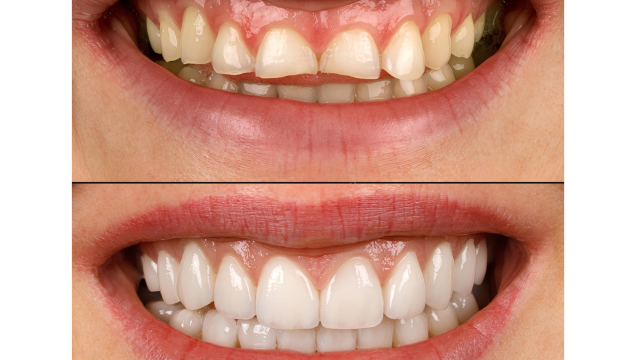
When patients explore cosmetic dentistry to restore a fractured incisal edge, close an unwanted space between front teeth, or bring symmetry to an irregular smile line, they often encounter a single generic recommendation: porcelain veneers. Yet treating all anterior aesthetic concerns as if they require the same tooth preparation is one of the most common pitfalls in restorative dentistry. Choosing veneers for chipped teeth, designing veneers for gaps between teeth, and planning veneers for uneven teeth each involve fundamentally different biomechanical demands, enamel thickness requirements, and optical transitions. Depending on the underlying tooth position and enamel volume, the appropriate solution may range from direct tooth-colored resin bonding or an ultra-thin 0.1 mm no-prep ceramic shell to a 0.3 mm minimal-prep feldspathic laminate—or, where structural loss is severe, a full-coverage ceramic crown.
Understanding why each structural concern calls for a specific preparation depth empowers patients to ask informed questions before any healthy tooth structure is altered. At Harue Dental Clinic in Gangnam-gu, Seoul, founded in 1995, Director Dr. Hanna Lee brings 30+ years of clinical experience and more than 20 years of hands-on laminate design and ceramic fabrication experience to anterior smile restoration. Rather than outsourcing restorations to an external commercial laboratory, Dr. Hanna Lee personally designs each laminate using optical 3D scanning, digital Smile Preview planning, and an in-house CEREC CAD/CAM milling system introduced in 2007, guided by her 2011 patent for minimally damaging tooth design and her registered patent for facial-proportion-based implant and smile design techniques (Patent No. 10-1067942). This clinical guide breaks down how specific anterior tooth defects dictate preparation depth, ceramic thickness, and restorative technique.
Why One Veneer Technique Cannot Solve Every Front-Tooth Concern
A porcelain laminate veneer is a thin ceramic shell bonded to the front (labial) surface of a tooth to modify its shape, shade, or apparent alignment. While consumer galleries frequently group all smile makeovers together under a single label, clinical restorative planning starts with a three-dimensional geometric question: Does correcting this defect require adding volume to the existing tooth surface, removing a protruding contour, or redistributing visual width across neighboring teeth?
Every natural front tooth has a finite layer of outer enamel covering the underlying dentin. Adhesive dentistry relies heavily on enamel preservation because ceramic laminates achieve their strongest, most predictable micromechanical bond when cemented to healthy enamel rather than deeper dentin, as demonstrated in clinical reviews of all-ceramic micro-veneer preparation and enamel bonding. At the same time, every ceramic restoration needs sufficient material thickness to mask underlying discoloration, replicate natural incisal translucency, and resist chewing stresses without feeling bulky against the lips or trapping plaque along the gumline.
When a clinician evaluates a patient for laminate smile design, three physical variables determine which technique matches the problem:
- Arch position (recessed vs. protruding): If a tooth is slightly recessed or small, adding a thin ceramic layer brings it forward into harmony with adjacent teeth without drilling. If one corner of a mildly crooked tooth protrudes forward past the ideal arch line, placing a no-prep veneer directly over that prominence would make the tooth look even more protruding; selective minimal preparation is required to tuck that contour back into alignment.
- Remaining enamel and structural integrity: A shallow enamel chip leaves abundant surrounding enamel for bonding, whereas a deep fracture extending into dentin—or a tooth weakened by large prior fillings or root canal therapy—alters how the tooth flexes under load, a biomechanical factor analyzed in studies on fracture resistance and deflection of restored anterior teeth.
- Gingival architecture and interdental papillae: Spaces near the biting edge (diastemas) behave differently from triangular spaces near the gumline (black triangles), which require careful management of the cervical emergence profile so the ceramic contours gently support the interdental gum tissue without creating overhanging ledges.
Comparing Veneer Preparation Levels and Restorative Alternatives
Before examining each cosmetic concern individually, it helps to understand the spectrum of conservative anterior treatments available at Harue Dental Clinic's practice in Gangnam-gu. Rather than forcing every tooth into a conventional 0.7 mm reduction protocol, Dr. Hanna Lee selects the least invasive option capable of achieving both structural stability and facial harmony.
| Clinical Technique | Typical Tooth Reduction | Target Ceramic / Material Thickness | Primary Clinical Indications | Typical Appointment Timeline |
|---|---|---|---|---|
| Direct Tooth-Colored Filling (Composite Bonding) | Little to no reduction of healthy enamel (caries or sharp fracture bevel only) | Variable direct composite resin increment | Small localized incisal chips, minor enamel wear, or pin-point cervical defects | Single visit (typically 30 to 60 minutes) |
| No-Prep Laminate Veneer | None (0.0 mm reduction; direct enamel bonding) |
Down to 0.1 mm through digital design where case permits |
Reasonably well-aligned teeth needing shade improvement, translucency, minor edge refinement, or small additive gap closure | Single visit lasting 1 to 3 hours (after 30 to 60 minute consultation) |
| Minimal-Prep Laminate Veneer | Approximately 0.3 mm average enamel reduction |
Thin custom-milled feldspathic ceramic | Moderate shape irregularities, uneven tooth edges, noticeable wear, or mild misalignment beyond prepless limits | Usually 1 to 2 visits over 1 to 2 weeks (same-day bonding available in suitable cases) |
| Conventional Laminate Preparation | Approximately 0.7 mm reduction |
Standard laminate thickness (~0.7 mm) |
Cases requiring deeper room for major contour changes or heavy shade masking | Multi-step or CAD/CAM workflow depending on case complexity |
| Black Triangle Correction Protocol | Conservative contouring or minimal-prep as dictated by root/crown taper | Ultra-thin laminate (0.1 mm to 0.3 mm) + optional laser gum contouring |
Triangular dark spaces between teeth near the gumline caused by gum recession or bell-shaped teeth | 1 to 2 visits depending on whether soft-tissue recontouring is included |
| Same-Day CEREC All-Ceramic / Zirconia Crown | Full coronal preparation (360° axial and incisal reduction) |
Full-coverage ceramic (150 MPa CEREC ceramic or monolithic zirconia) |
Extensive fractures, severe structural decay, inadequate enamel for veneer bonding, or heavy bite forces | Single-day CAD/CAM fabrication (1 to 3 hours chairside) or staged visits |
Concern 1: Veneers for Chipped Teeth and Worn Incisal Edges
Front teeth (maxillary and mandibular incisors and canines) act as the shearing guides of the human bite. Over time, accidental trauma—such as biting an unexpected hard object, sports impacts, or falls—or cumulative mechanical attrition can leave the biting edges jagged, asymmetrical, or shortened. When patients seek veneers for chipped teeth or want to fix chipped front tooth structure, the first clinical decision is determining whether the defect is purely a localized enamel loss or part of a broader pattern of occlusal wear.
When a Chipped Tooth Only Needs Direct Tooth-Colored Bonding
Not every chipped front tooth requires a porcelain laminate. If a patient presents with a small, isolated corner chip on a single incisor whose overall shade, alignment, and proportions are otherwise harmonious, a conservative tooth-colored filling (direct composite resin bonding) is often the most tooth-preserving choice. During a single appointment, the dentist cleans the fractured enamel prism margin, applies an adhesive bonding agent, and sculpts shade-matched composite resin directly onto the defect before curing and polishing it. Because composite bonding requires no reduction of the intact facial surface, it preserves natural structure for minor defects.
When Chipped or Worn Teeth Benefit from Porcelain Laminates
Direct composite resin has lower flexural strength and wear resistance than fired or CAD/CAM-milled dental ceramics, and its resin matrix can pick up extrinsic stains along the repair line over time. Consequently, veneers for worn edges or moderate anterior chips become the preferred clinical choice in several distinct scenarios:
- Broader incisal edge loss across multiple front teeth: When two or four upper incisors have chipped or worn down unevenly, restoring only the broken tip with composite often leaves visible transition lines or chips off repeatedly during protrusive jaw movements. A feldspathic ceramic laminate covers the entire labial face and wraps smoothly over the incisal edge, distributing shearing forces across a unified, micromechanically bonded enamel interface.
- Additive restoration with no-prep (
0.1 mm) laminates: If a tooth has lost incisal length from mild chipping or edge wear—meaning the tooth is now shorter or flatter than its neighbors—and the facial surface is not protruding, Dr. Hanna Lee can often design an ultra-thin no-prep laminate (down to0.1 mmwhere the design permits). Because the goal is to add missing edge length and restore natural enamel translucency, no healthy facial enamel needs to be ground away. - Minimal-prep (
0.3 mm) laminates for stepped or jagged fracture lines: When a fracture leaves a sharp, irregular step across the front surface of the tooth, or when adjacent teeth must be harmonized in both length and facial curvature, a minimal-prep laminate averaging approximately0.3 mmof reduction smooths sharp stress concentrators and establishes a clean peripheral finish line for the ceramic shell.
Screening the Bite Before Restoring Chipped Edges
A critical step that separates durable restorative care from repeated chipping is diagnosing why the tooth chipped in the first place. If edge wear or fracturing was caused by an unbalanced bite (malocclusion) or nocturnal teeth grinding and clenching (bruxism), bonding a thin ceramic veneer onto the same high-stress trajectory without addressing the bite invites mechanical failure. During consultation, Dr. Hanna Lee evaluates anterior guidance, overbite depth, and functional jaw movements. Where significant bite collapse or generalized wear exists, comprehensive bite reconstruction or an occlusal nightguard may be recommended to protect the new ceramic edges. Conversely, if a tooth has suffered a deep coronal fracture leaving inadequate perimeter enamel for adhesive laminate bonding, a full-coverage same-day CEREC all-ceramic crown (150 MPa flexural strength compared with 80 MPa for standard porcelain) or zirconia crown provides the structural ferrule needed to support biting loads.
Concern 2: Veneers for Gaps Between Teeth (Diastemas vs. Black Triangles)
Patients searching for veneers for gaps between teeth are typically dealing with one of two anatomically distinct conditions: a midline or generalized diastema (a vertical space visible all the way between adjacent teeth, often caused by a discrepancy between jaw arch size and tooth width) or an interdental black triangle (a dark, wedge-shaped opening just above the contact point near the gumline, usually caused by gum contour changes, periodontal bone loss, or triangular tooth morphology).
Closing spaces with ceramic laminates requires far more precision than simply making the teeth wider. If a clinician closes a 2 mm gap by blindly adding 1 mm of flat ceramic to the inner edges of two central incisors, the resulting teeth can look unnaturally square and blocky. Clinical literature on the esthetic management of maxillary midline diastema using porcelain laminate veneers emphasizes that successful space closure depends on maintaining proportional width-to-length ratios and crafting a smooth cervical emergence profile.
Closing Diastemas with Additive No-Prep or Minimal-Prep Laminates
When teeth are spaced apart because they are naturally small ("peg" lateral incisors or narrow central incisors) and sit in proper arch alignment, closing the gap is primarily an additive procedure:
- Proportional redistribution across the smile zone: Using Digital Smile Preview software and facial-proportion analysis—drawing on principles from Dr. Hanna Lee's registered patent for facial-proportion-based smile design (Patent No. 10-1067942)—the clinician measures how much width can be added to the central incisors before they appear overly wide. If a gap is small, two laminates on the central incisors may close the space harmoniously. If the space is wider or distributed across several teeth, placing ultra-thin laminates across four to six anterior teeth allows the added width to be shared subtly across the central incisors, lateral incisors, and canines.
- Enamel-preserving preparation: Because spaced teeth rarely overlap, many mild-to-moderate diastema cases qualify for no-prep laminates (
0.1 mmthickness) or conservative minimal-prep laminates (0.3 mmaverage reduction). Instead of removing outer enamel on the front of the tooth, the digital design extends the ceramic shell slightly into the interproximal zone to establish a natural contact point.
Black Triangle Correction: Managing Gumline Spaces
Dark triangular spaces near the gumline present a different anatomical challenge. When teeth have a pronounced triangular or "bell-shaped" crown—narrow at the gumline and wide at the biting edge—or when gingival recession has lowered the interdental papilla, the contact point between neighboring teeth sits too close to the biting edge, leaving an open triangle above it.
At Harue Dental Clinic, Black Triangle Correction approaches the gumline, tooth length, ceramic translucency, and interdental spaces as a unified system:
- Lengthening the interproximal contact area: By designing a laminate that gently broadens the cervical third of the tooth as it emerges from the gum margin, the contact point is extended closer to the gumline, closing the dark space and providing physical support for the gingival papilla.
- Combining ceramic contours with soft-tissue refinement: Where asymmetrical gum levels contribute to the visual imbalance, laser gum contouring can be coordinated with laminate or crown adjustment so both the pink gingival frame and the white ceramic proportions align smoothly.
- Preventing plaque traps: The interproximal margin of a gap-closing veneer must transition seamlessly into the natural tooth root without creating a horizontal ledge. High-precision optical 3D intraoral scanning and in-house CAD/CAM milling allow Dr. Hanna Lee to inspect and hand-finish these delicate cervical margins so patients can floss normally around every restoration.
Concern 3: Veneers for Uneven Teeth, Asymmetry, and Mild Misalignment
The third major category involves veneers for uneven teeth, veneer shape correction, and veneers for mild crooked teeth. Patients in this group often have front teeth that vary in length (for example, lateral incisors that look pegged or underdeveloped next to long central incisors), teeth with asymmetrical canted edges, or mild crowding and rotation where one tooth overlaps or sits slightly behind another.
Why Mild Misalignment Usually Calls for Minimal-Prep (0.3 mm) Rather Than No-Prep
While marketing materials sometimes suggest that prepless veneers can straighten any crooked smile, basic geometry explains why that claim does not hold up clinically. Suppose a patient has two upper central incisors where the left incisor is rotated slightly outward (labially) and the right incisor is tilted slightly inward (lingually):
- If a dentist bonds no-prep veneers onto both teeth without any reduction, the inward-tilted right tooth must receive a thicker ceramic veneer to bring its front face out to match the protruding left tooth. The result is an entire arch that looks bulky, prominent, and over-contoured beneath the upper lip.
- Instead, by applying a minimal-prep laminate protocol with an average reduction of approximately
0.3 mm(less than half the roughly0.7 mmremoved in conventional veneer preparations), the clinician selectively reduces the protruding corner of the outward-rotated tooth while leaving the recessed areas largely untouched (or adding ceramic volume where needed).
Research on preplanning and treatment using digital guided tooth preparation for laminate veneers confirms that planning the final outer tooth contour first—and preparing the tooth strictly relative to that target volume—preserves significantly more enamel than freehand conventional grinding. When combined with a digital smile design and mock-up workflow, the patient and dentist can visualize how minor subtractive leveling on protruding surfaces and additive ceramic layering on recessed surfaces work together to create the optical illusion of a straight, symmetrical arch.
Knowing the Boundary Between Aesthetic Veneers and Orthodontics
Ethical cosmetic dentistry requires recognizing when misalignment exceeds what ceramic restoration can safely correct. Laminates modify the visible crown contour; they do not move tooth roots through bone. If teeth are severely crowded, heavily rotated, or locked in a crossbite or deep traumatic occlusion:
- Attempting to "straighten" severely crooked teeth with veneers alone would require aggressive reduction beyond the enamel layer into deep dentin, risking pulpal irritation (nerve sensitivity) and weaker adhesive bond strength.
- In cases of severe malocclusion, orthodontic alignment (such as clear aligners or braces) is the appropriate primary treatment to move the roots into proper position, after which ultra-thin no-prep or minimal-prep laminates can be used if shape or shade refinement is still desired.
How Harue Dental Clinic Matches Technique to Anatomy in Seoul
For patients traveling to South Korea—or international residents in Seoul—seeking anterior aesthetic restoration, predictability depends on how closely the diagnostic design matches the final ceramic piece cemented in the mouth. In many conventional dental practices, the dentist prepares the teeth, takes a physical silicone impression, places acrylic temporary veneers for one to two weeks, and ships the case to an outside commercial dental technician who has never seen the patient's face, lip dynamics, or speech patterns in person.
At Harue Dental Clinic in Sinsa-dong, Gangnam-gu, the laminate workflow is structured around direct clinician control and digital engineering:
- Personalized Consultation and Smile Preview (30 to 60 Minutes): Every case begins with a comprehensive clinical exam, radiographic screening for underlying decay or gum disease, occlusal evaluation, and digital photography. Using digital Smile Preview software, Dr. Hanna Lee analyzes tooth length, width-to-length ratios, incisal edge curvature relative to the lower lip line, and overall facial symmetry—applying principles reflected in her 2 patent applications and 1 registered patent for facial-proportion-based implant and smile design techniques (Patent No. 10-1067942).
- Optical 3D Intraoral Scanning: Instead of conventional putty impressions that can distort along interdental gaps or thin incisal edges, an optical 3D scanner captures a high-resolution digital model of the teeth, gums, and opposing bite.
- Minimally Invasive Guided Preparation (When Indicated): Guided by her 2011 patent related to minimally damaging tooth design, Dr. Hanna Lee determines tooth by tooth whether
0.0 mm(no-prep down to0.1 mmthickness) or approximately0.3 mm(minimal-prep) is appropriate. Local anesthesia is administered only when selective enamel preparation is required; no-prep cases typically require no anesthesia. - In-House CEREC CAD/CAM Milling and Hand-Crafted Feldspathic Finishing: Harue Dental Clinic introduced its CEREC digital prosthetic system in 2007. With more than 20 years of personal experience designing laminates and performing ceramic fabrication herself, Dr. Hanna Lee mills restorations in-house from feldspathic ceramic blocks chosen for their lifelike light transmission, gradient translucency, and chameleon-like blending with natural enamel. Long-term clinical data in a systematic review of clinical outcomes of no-prep veneers and conventional veneers highlight how precise marginal fit and enamel-preserving adhesive cementation protocols support durable aesthetic outcomes.
- Same-Day Bonding Without Fragile Multi-Day Temporaries: Because design, milling, glaze characterization, and bonding take place under one roof, eligible no-prep and same-day laminate cases can be completed in a single appointment lasting 1 to 3 hours without the inconvenience of wearing temporary plastic veneers that can detach or stain between visits. Even when minimal-prep cases are staged across 1 to 2 visits over 1 to 2 weeks for complex multi-tooth refinement, the in-house digital lab allows rapid chairside shade or contour adjustments before final adhesive bonding.
Patients interested in seeing how different combinations of chips, gaps, and uneven contours have been restored can browse documented clinical cases in the before-and-after gallery and read verified patient feedback on the patient reviews page.
Recovery, Candidacy Limits, and Realistic Expectations
Whether a patient receives a single conservative veneer for a chipped incisor or six minimal-prep laminates to harmonize an uneven smile line, understanding clinical candidacy, recovery, and maintenance is essential before starting treatment.
Who Is Not an Immediate Candidate for Laminates?
During the initial examination, Dr. Hanna Lee screens for conditions that must be treated before—or instead of—placing ceramic laminates:
- Active tooth decay or untreated gum disease: Cavities and periodontal inflammation must be fully resolved before any cosmetic ceramic work is bonded.
- Inadequate remaining enamel: Because laminate veneers rely on enamel adhesion, teeth that have lost most of their outer enamel due to severe acid erosion, large existing restorations, or extensive fractures are generally better served by full-coverage all-ceramic or zirconia crowns.
- Uncontrolled severe bruxism (clenching and grinding): Excessive parafunctional biting forces can chip or debond thin ceramic shells. Patients with grinding habits who proceed with veneers should wear a custom protective nightguard during sleep.
What to Expect After Bonding and Long-Term Care
Recovery following laminate bonding is immediate, with no required downtime away from daily activities or travel in Seoul. Patients who undergo minimal-prep enamel shaping may experience mild thermal sensitivity to hot or cold beverages or slight gum tenderness for 2 to 3 days, which typically subsides on its own and can be managed with over-the-counter pain relievers if needed.
While feldspathic ceramic resists surface staining far better than natural tooth enamel or composite resin, no fixed lifespan is promised for laminates. Restorations can still experience chipping, cracking, debonding, or marginal staining over time depending on individual bite habits and oral care. Protecting your investment requires consistent daily brushing and flossing, avoiding using front teeth to bite hard objects (such as ice, hard candy, nut shells, or fingernails), wearing a nightguard if you clench or grind, and attending regular professional dental check-ups.
Planning a Consultation from the United States or Abroad
International patients considering anterior laminate treatment in Seoul can contact Harue Dental Clinic's English-speaking coordinator team (including coordinator Jeon Jin-mi) via the online contact page, email (info@haruedentalclinic.com), international phone (+82 2 543 0037), or WhatsApp (+1 208-825-7756). Clinic hours in Sinsa-dong, Gangnam-gu (41-11, Gangnam-daero 162-gil) are Monday through Friday from 09:00 AM to 17:25 PM KST and Saturday from 08:30 AM to 12:30 PM KST on a reservation basis (patients should confirm English coordinator availability for their specific appointment date in advance). Sharing clear close-up smile photos and any recent dental X-rays before flying helps the team estimate whether your chipped, gapped, or uneven teeth are likely candidates for a single-visit no-prep/same-day appointment or a 1-to-2-week minimal-prep schedule.
The Bottom Line
- The structural defect dictates preparation depth: A minor enamel chip, an interdental gap (diastema or black triangle), and a rotated or uneven tooth sit at different positions relative to the ideal dental arch, requiring distinct levels of additive or subtractive contouring.
- No-prep laminates (
0.1 mm) work strictly for additive cases: Ultra-thin prepless laminates bond directly onto intact enamel without tooth reduction, making them suitable when teeth are already well aligned and sized to accept added thickness—such as widening slightly narrow teeth to close small spaces or restoring worn edges. - Minimal-prep laminates (
0.3 mmaverage reduction) address moderate contour irregularities: When a tooth is mildly rotated, stepped, or uneven in length, selective reduction of approximately0.3 mm(compared with roughly0.7 mmin conventional laminate preparation) creates room to align the arch without creating bulky contours. - Not every chip or gap requires a ceramic veneer: Small, localized incisal chips can often be restored conservatively in a single visit with direct tooth-colored composite fillings, whereas large fractures with compromised enamel or heavy bite forces may require an all-ceramic or zirconia crown (
150 MPaCEREC ceramic strength versus80 MPastandard porcelain). - Digital Smile Preview and in-house CAD/CAM milling streamline care for travelers: Using 3D optical impressions and on-site feldspathic ceramic fabrication, eligible patients can evaluate proposed proportions in advance and complete no-prep or same-day laminate bonding in a single appointment lasting 1 to 3 hours, or minimal-prep cases across 1 to 2 visits over 1 to 2 weeks.
Frequently Asked Questions
Can a single chipped front tooth be fixed with one veneer, or do I need to treat multiple teeth?
A single chipped front tooth can be restored with either a direct tooth-colored composite filling (for minor chips) or a single custom-shaded ceramic laminate if the surrounding teeth are already uniform in color and shape. Because Harue Dental Clinic designs and mills feldspathic ceramic laminates in-house with Dr. Hanna Lee personally overseeing shade characterization and translucency, a single veneer can be closely matched to adjacent natural teeth. However, if the neighboring incisors also have worn edges, discoloration, or asymmetry, treating two or four front teeth together often creates a more balanced smile line.
What is the difference between closing a gap with no-prep veneers versus minimal-prep veneers?
No-prep veneers (as thin as 0.1 mm) are bonded directly onto existing tooth enamel without removing any tooth structure, making them ideal when the teeth next to the gap are slightly narrow and well aligned so adding width closes the space naturally. Minimal-prep veneers (averaging approximately 0.3 mm of enamel reduction) are used when closing the gap also requires correcting uneven tooth angles, mild rotation, or disproportionate widths so the finished teeth do not look overly wide or bulky.
Can porcelain veneers fix dark triangular spaces ("black triangles") near my gums?
Yes, in many cases. Black Triangle Correction uses custom-contoured laminates—sometimes paired with conservative tooth contouring or laser gum contouring—to gently modify the cervical emergence profile of the teeth near the gumline. This shifts the contact point between neighboring teeth closer to the gums and closes the dark triangular space while maintaining smooth margins that allow normal flossing.
Are veneers a good option for mildly crooked or uneven front teeth?
Minimal-prep laminates can visually align mildly crooked, stepped, or uneven teeth by selectively reducing protruding enamel contours (averaging about 0.3 mm compared with 0.7 mm in conventional preparation) and building out recessed surfaces with ceramic. However, veneers only reshape the visible crown and do not move tooth roots; if you have severe crowding, major tooth rotation, or a significant bite misalignment, orthodontic treatment is the safer primary solution.
How long do I need to stay in Seoul to get veneers for chipped or gapped teeth?
Treatment duration depends on the preparation technique required for your anatomy. Eligible no-prep or same-day CAD/CAM laminate cases can be scanned, milled in-house, and bonded in a single appointment lasting 1 to 3 hours (following a 30 to 60 minute consultation), without needing multi-day temporary veneers. Minimal-prep laminate cases addressing moderate shape irregularities or multiple uneven teeth typically take 1 to 2 visits over 1 to 2 weeks.
Will getting veneers for uneven teeth make my teeth sensitive?
Because no-prep (0.1 mm) and minimal-prep (0.3 mm average reduction) protocols preserve the outer enamel layer rather than cutting deeply into dentin, post-treatment discomfort is minimal. Patients who undergo minimal-prep enamel shaping may notice mild sensitivity to hot or cold temperatures or slight gum tenderness for 2 to 3 days after bonding, which resolves rapidly without downtime.
This article is for informational purposes only and is not a self-diagnosis tool or a substitute for a clinical examination and personalized treatment plan from a licensed dentist.
More Articles
Continue reading our clinical guides.