Personalized Medical Care & Dedicated International Patient Concierge

Medical Guide
Understanding All-on-4 Dental Implants
Understand All-on-4 dental implants, how the procedure works, benefits, recovery, and who it's for. Restore your smile—book a consultation today!
Schedule a ConsultationWhat Is All-on-4 Dental Implant Treatment?
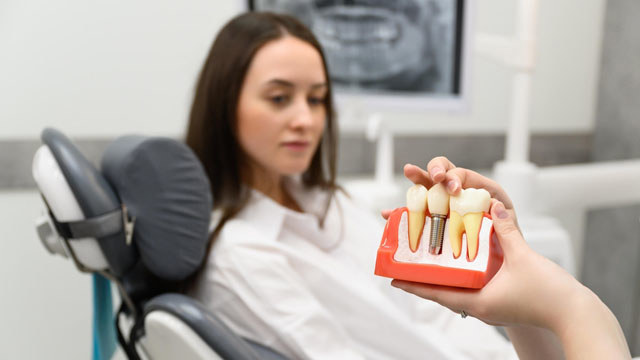
All-on-4 is a full-arch dental restoration technique designed for patients who have lost most or all of their natural teeth in the upper or lower jaw. Instead of placing an individual implant for every missing tooth, the method uses four strategically positioned implants to support a complete, fixed dental bridge. Two implants are placed vertically toward the front of the jaw, in the region where bone is typically more abundant, while the remaining two are angled — often at 30 to 45 degrees — toward the back of the jaw. This angulation allows the implants to engage denser, more stable bone structures that are frequently still present even in patients who have experienced significant bone resorption near the rear molars.
This approach was developed to give people with extensive tooth loss a fixed, non-removable alternative to traditional dentures — one that restores both chewing function and a natural-looking smile without requiring a full arch of implants, and often without extensive preparatory bone grafting. Because all four implants work together to support a single connected prosthesis, the biting forces generated during chewing are distributed evenly across the arch, which can contribute to more stable, comfortable function compared to older restorative methods.
Who Experiences Tooth Loss Severe Enough to Need Full-Arch Restoration?
Extensive tooth loss can result from long-term periodontal disease, repeated tooth decay, traumatic injury, or the natural effects of aging on oral tissue. Chronic gum disease in particular is one of the most common underlying causes, as prolonged inflammation gradually breaks down the bone and connective tissue that anchor teeth in place, eventually leading to looseness and loss even in teeth that are otherwise free of decay.
For many patients, years of individual extractions or failed restorations eventually leave the jaw with too few stable teeth to support normal biting and speaking function. Left unaddressed, this can lead to further bone loss — since the jawbone requires the stimulation of tooth roots or implants to maintain its density — as well as changes in facial structure, altered speech patterns, and a decline in nutrition due to difficulty chewing firm or fibrous foods.
Traditional removable dentures address some of these concerns but often come with limitations — reduced bite force, slippage during eating or speaking, and ongoing discomfort from friction against the gums. Over time, poorly fitting dentures can also accelerate the very bone loss they are meant to compensate for. All-on-4 implants were developed specifically to address these shortcomings by providing a fixed, implant-supported solution that more closely mimics the function and stability of natural teeth.
Is All-on-4 the Right Option for You?
Because All-on-4 involves a full-arch approach rather than single-tooth replacement, candidacy depends on a patient's overall oral and jaw condition rather than the number of teeth already missing.
Patients who may benefit from this treatment typically include those who:
- Are missing most or all teeth in one or both arches
- Have experienced some degree of jawbone loss but do not wish to undergo extensive bone grafting
- Are dissatisfied with the stability or comfort of removable dentures
- Are in general health suitable for implant placement, without uncontrolled systemic conditions that would interfere with healing
- Have realistic expectations regarding treatment timelines and long-term maintenance requirements
Certain factors may require additional evaluation or a modified treatment plan, including uncontrolled diabetes, active gum infection, heavy smoking, or insufficient bone volume even in the posterior region. In some cases, a preliminary phase of gum treatment or minor grafting may be recommended before implant placement to improve long-term outcomes. A thorough clinical and radiographic evaluation is necessary to confirm suitability, as jawbone density, gum health, and bite alignment all influence whether the standard All-on-4 protocol — or a modified approach such as All-on-6 — is appropriate for a given patient.
How the All-on-4 Procedure Works
Initial Diagnosis and Digital Planning
Treatment begins with a detailed examination, including 3D cone-beam CT imaging of the jawbone to assess bone density, nerve position, and sinus location, all of which inform the precise position and angulation of each implant. This digital planning stage is critical to All-on-4's success, as the angled placement of the posterior implants is designed to make use of the denser, more available bone typically found toward the back of the jaw — reducing the need for bone grafting in many cases. Digital impressions and bite records are also taken during this stage to begin designing the eventual prosthetic bridge before surgery even takes place.
Implant Placement
During the procedure, any remaining unhealthy or unstable teeth are removed if necessary, and the site is prepared to receive the implants. The four implants are then placed according to the digital treatment plan, with careful attention paid to achieving strong initial stability in the bone — a factor that influences whether a temporary bridge can be attached the same day. Because the technique relies on angled implant positioning rather than grafted bone, it is often completed in a single surgical visit, which can reduce both treatment time and the number of separate procedures a patient must undergo.
Immediate or Early Loading
In many cases, a temporary fixed bridge can be attached to the implants on the same day as surgery, allowing patients to leave with functional, natural-looking teeth while the implants integrate with the jawbone over the following months. This transitional prosthesis is typically designed with a lighter framework and adjusted bite contact to reduce excess pressure on the healing implants, while still allowing patients to eat a modified diet and speak comfortably during recovery.
Final Restoration
Once osseointegration is complete — the process by which bone fuses to the implant surface, typically taking three to six months depending on individual healing capacity and bone quality — the temporary bridge is replaced with a final, custom-fitted prosthesis. This definitive restoration is designed for long-term use, function, and aesthetics, and is fabricated with more durable materials suited to the full range of normal biting forces.
Dr. Hanna Lee's Approach to Full-Arch Implant Care
All-on-4 treatment at Harue Dental Clinic is directed by Dr. Hanna Lee, who graduated second in her class from Pusan National University College of Dentistry in 1994 and has since focused her career on implantology and aesthetic dentistry. Dr. Lee has completed clinical implant training at the University of Berlin and is recognized for one of the highest volumes of German Ankylos implant procedures in Korea and Asia, serving as an advisory physician for the Ankylos system. She also holds a research advisory role with Osstem Implant and has lectured on CEREC-based restorative techniques through the Korean Academy of Computerized Restorative Dentistry.
Beyond her clinical implant work, Dr. Lee has authored The DaVinci Dental Contouring Atlas, a clinical framework addressing tooth contouring and proportion that reflects her broader emphasis on aesthetics alongside function. This dual focus is particularly relevant to full-arch restoration, where the final prosthesis must not only restore chewing ability but also support natural facial proportions and a balanced smile line.
Every diagnosis and treatment plan at the clinic is handled personally by Dr. Lee, reflecting the clinic's broader philosophy of preserving natural tissue wherever possible and designing each case around the individual patient's jaw structure and facial proportions, rather than applying a standardized protocol.
Why Patients Choose Harue Dental Clinic
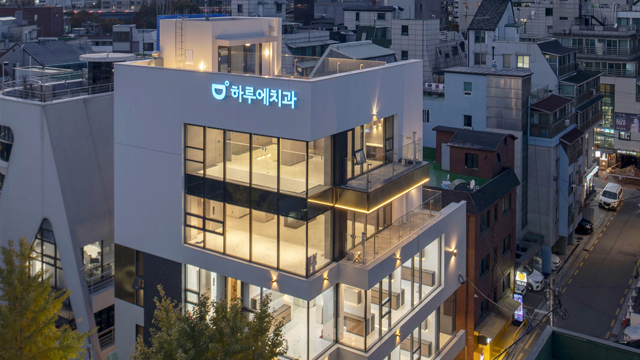
Harue Dental Clinic, located in a quiet section of Sinsa-dong in Gangnam-gu, Seoul (Haru-e Dental Building), has served patients from Korea and abroad since 1995. The clinic operates a fully digital, in-house dental laboratory established in 2007, connecting diagnosis, prosthetic design, and fabrication into a single streamlined workflow. This infrastructure supports precise planning for complex cases like All-on-4, where accurate implant positioning and prosthetic fit are essential to long-term success, and where close coordination between clinical and laboratory teams can help reduce delays between treatment stages.
The clinic's treatment philosophy also emphasizes transparency: costs are communicated clearly before treatment begins, only clinically necessary procedures are recommended, and consultations are conducted with full accountability at every step. For patients considering a significant procedure like full-arch restoration, this level of clarity can be an important factor in feeling confident about a treatment decision.
Recovery and What to Expect
Recovery after All-on-4 surgery varies by individual but generally follows a predictable pattern. Mild swelling, bruising, and discomfort in the days immediately following surgery are normal and typically managed with prescribed medication and a soft-food diet. Patients are usually advised to avoid hard, sticky, or excessively hot foods during the initial healing period, and to maintain gentle but consistent oral hygiene around the surgical site to reduce the risk of infection.
Most patients return to normal daily activities within a few days, while full integration of the implants with the jawbone generally takes several months. During this period, follow-up visits allow the clinical team to monitor healing, check the fit and function of the temporary bridge, and address any adjustments needed before the final prosthesis is fabricated.
Patients are advised to maintain careful oral hygiene and attend follow-up visits so that healing can be monitored and the fit of the prosthesis assessed over time. Long-term success also depends on ongoing maintenance, including regular professional cleanings and periodic check-ups to monitor the implants and surrounding tissue. As with any surgical procedure, outcomes depend on individual healing capacity, bone quality, and adherence to post-treatment care instructions.
A Realistic Outlook on Full-Arch Restoration
All-on-4 dental implants offer a well-established option for patients facing extensive tooth loss, providing fixed, functional teeth without the need for a full arch of individual implants in most cases. As with any dental treatment, outcomes vary between individuals, and a personalized evaluation is the only way to determine whether this approach — or an alternative such as All-on-6 or staged implant placement — is suitable for a particular patient's oral condition. At Harue Dental Clinic, this evaluation begins with a direct consultation with Dr. Hanna Lee, whose treatment planning is grounded in decades of clinical experience in implantology and restorative dentistry, supported by the clinic's in-house digital infrastructure for diagnosis and prosthetic fabrication.
More Articles
Continue reading our clinical guides.