Personalized Medical Care & Dedicated International Patient Concierge

Medical Guide
Smile Makeover in Seoul: Facial-Proportion Smile Design
Explore how a facial-proportion smile makeover in Seoul progresses from 3D digital scanning and a diagnostic wax-up preview to final ceramic bonding.
Schedule a ConsultationSmile Makeover in Seoul: How a Facial-Proportion-Based Plan Works From Scan to Final Smile
Medically reviewed by Dr. Hanna Lee, DDS, MSD, PhD
The Bottom Line
- Facial architecture drives tooth geometry: A predictable smile makeover Seoul plan maps the interpupillary plane, facial midline, lip mobility, and lower-facial third before determining central incisor length and width.
- Hardware-assisted proportion analysis: At Harue Dental Clinic in Gangnam, Dr. Hanna Lee applies a facial-proportion methodology supported by Korean Patent No. 10-1067942 (Oral Aesthetic Measuring Ruler) alongside 3D intraoral scanning and clinical photography.
- Mandatory pre-preparation verification: Through a digital design and a physical diagnostic wax-up smile preview, patients evaluate tooth length, incisal edge position, and speech phonetics in the mirror before any irreversible enamel modification occurs.
- Integrated multi-modality execution: Depending on structural and soft-tissue baselines, a personalized plan may combine Waterlase laser gum contouring,
0.1 mmno-prep laminate veneers, minimal-prep ceramic veneers (0.3 to 0.7 mm), or all-ceramic crowns (0.5 to 1.0 mm) milled and hand-finished in an in-house CAD/CAM laboratory.
Why Facial Proportions Matter More Than Stock Tooth Templates
Patients researching a smile makeover Korea often see before-and-after galleries where every set of restorations looks nearly identical—uniformly bright, opaque, and squared off across the front teeth. While uniform arches may appear striking in close-up photographs, they frequently look artificial in conversation when their dimensions clash with the patient's craniofacial framework, lip curvature, or vertical facial height.
In prosthodontic literature indexed in PubMed by the National Library of Medicine, investigators examining the Quantification of facial and smile esthetics in the Journal of Prosthetic Dentistry emphasize that visual harmony depends on coordinating macro-esthetic facial landmarks with mini-esthetic lip framing and micro-esthetic tooth morphology. Rather than imposing a single universal ratio on every patient, an evidence-based facial proportion smile design evaluates how multiple anatomical planes interact in motion.
Similarly, an analysis in the Journal of Prosthodontics titled Mathematical Tooth Proportions: A Systematic Review demonstrates that fixed mathematical formulas—such as a rigid golden proportion—cannot be applied mechanically across diverse populations without accounting for arch curvature, facial width, and soft-tissue display. When anterior restorations are designed on a model without referencing the patient's eyes, nasal base, and dynamic lip line, three preventable problems arise:
- Canted incisal planes: Mounting a cast without aligning to the interpupillary line can leave finished restorations tilted relative to the eyes.
- Disproportionate central dominance: Central incisors that are too wide or long for the philtrum and lower facial third can crowd lateral incisors or strain lip closure.
- Midline and width disharmony: Clinical research in the Journal of Esthetic and Restorative Dentistry evaluating the Effect of Midline Deviation and Crown Width Disproportion on Perception of Smile Esthetics confirms that asymmetric crown width ratios and axial tilts are readily detected when framed by the lips.
For this reason, advanced cosmetic dentistry Seoul workflows treat tooth restoration as an architectural discipline that moves from the outside in—beginning with the whole face, narrowing to the lip frame, and only then specifying the millimeter contours of individual ceramic restorations.
The Clinical Philosophy Behind Facial-Proportion Smile Design in Gangnam
At Harue Dental Clinic, located at 10F, 410 Gangnam-daero in Gangnam-gu (serving patients near Gangnam Station and Sinsa-dong), multi-tooth aesthetic rehabilitation is structured around Dr. Hanna Lee's facial-proportion-based planning model. Holding a DDS, MSD, and PhD from Seoul National University, where she serves as an Adjunct Professor at the School of Dentistry and Graduate School of Clinical Dentistry, Dr. Lee has spent 30+ years integrating prosthodontic mechanics with craniofacial measurement.
A defining technical anchor of this workflow is Korean Patent No. 10-1067942, registered for an Oral Aesthetic Measuring Ruler. During the diagnostic phase, reference measurements correlate extraoral landmarks directly with intraoral tooth positions:
- Horizontal reference alignment: The interpupillary plane and commissural line establish the horizontal baseline for the incisal edges of the maxillary central incisors and canine tips.
- Vertical facial and dental midline: The facial midline—tracked through the glabella, nasal bridge, philtrum, and chin—is compared against the dental midline so the vertical axis of the central incisors remains parallel to the face.
- Smile arc and buccal corridor: The upper incisal edges follow a gentle convex curve parallel to the lower lip, while controlled premolar contour supports narrow arches without erasing natural shadow depth.
- Gingival zenith architecture: The highest point of each gum contour follows a balanced step relationship across central incisors, lateral incisors, and canines.
Patients can review the clinical background and instrumentation behind this planning approach on the clinic profile and philosophy page.
Step-by-Step: How the Smile Makeover Process Works From Scan to Final Smile
Understanding the sequence of a smile makeover process helps local residents and international visitors know exactly when their design input is captured.
| Stage in Workflow | Clinical Objective | Technology & Instruments | Verification Gate | Time Frame |
|---|---|---|---|---|
| 1. 3D Scan & Proportion Analysis | Record facial proportions and tooth anatomy | 3D CT, digital X-ray, PrimeScan / Omnicam, Oral Aesthetic Measuring Ruler | Review imaging and goals | 30–60 minutes consultation |
| 2. Digital Design & Wax-Up | Construct an additive 3D blueprint aligned to facial planes | CAD suite, 3D printing, and Dr. Hanna Lee's diagnostic wax-up | Compare proposed ratios | Prior to preparation |
| 3. Chairside Smile Preview | Test the 3D design in the mouth before preparation | Silicone transfer matrix and preview resin | Approve look and phonetics | Same or preview visit |
| 4. Gum & Conservative Prep | Harmonize gum margins and create ceramic space | Waterlase laser; mock-up-guided reduction | Confirm modality per tooth | 1 visit session |
| 5. In-House CAD/CAM & Ceramist | Mill ceramics and layer natural translucency | 24 milling units, 3D printers, and veneer master technician |
Shade and texture try-in | 1 visit to 2–3 days or 3–7 days |
| 6. Bonding & Bite Check | Bond restorations and balance dynamic bite guidance | Enamel-selective adhesive protocol and occlusal check | Final bite and speech check | Delivery + check in 7–14 days |
Stage 1: Comprehensive Smile Makeover Consultation and 3D Data Acquisition
Every plan begins with a 30–60 minutes smile makeover consultation capturing a three-dimensional dataset:
- Radiographic screening: Low-dose 3D CT and digital X-rays evaluate bone levels, root anatomy, existing root canals, and TMJ health.
- High-speed optical intraoral scanning: Using
17 digital scanning units(5 PrimeScansand12 Omnicams), the team captures digital models of both arches and bite registration without putty impressions. - Facial photography and proportion calibration: Standardized photos record the lips at rest, during speech, and at full smile, while Korean Patent No. 10-1067942 relates facial width and philtrum height to tooth dimensions.
Stage 2: Digital Planning and the Personally Designed Diagnostic Wax-Up
Once extraoral photographs and 3D scans are aligned, the restorative blueprint is built. Combining facial records with CAD software is supported by clinical protocols indexed in PubMed, such as the Digital planning protocol for functional and esthetic prosthetic treatment in the International Journal of Computerized Dentistry.
At Harue Dental Clinic, Dr. Hanna Lee personally designs the diagnostic wax-up rather than delegating the architectural plan to an external commercial lab. During the diagnostic wax-up smile design, Dr. Lee determines whether incisal lengthening clears protrusive bite guidance, which teeth qualify for additive 0.1 mm no-prep veneers versus 0.3 to 0.7 mm minimal preparation, and whether cervical gum levels need leveling first.
Stage 3: The Smile Preview (Trial Mock-Up) and Pre-Preparation Sign-Off
The key safeguard in a facial-proportion smile makeover is the Smile Preview—a diagnostic mock-up performed before any tooth preparation begins. Using a silicone matrix fabricated from the diagnostic wax-up, the clinician transfers a removable preview resin over the unprepped teeth. Sitting upright with a mirror under natural lighting, the patient and dentist verify four checkpoints:
- Lip posture and resting display: Confirming effortless lip closure and natural incisal edge display when the jaw is relaxed.
- Phonetics and speech clarity: Speaking phrases rich in f, v, s, and z sounds to ensure the proposed incisal edges do not trap the lower lip or alter airflow.
- Harmony with facial planes: Confirming that the incisal plane parallels the interpupillary line and complements the lower facial third.
- Shade and surface vitality: Selecting shade and translucency targets against the patient's complexion.
If any contour feels too long or prominent, Dr. Lee modifies the preview resin directly in the chair and re-scans the adjusted mock-up. No enamel is touched until the patient explicitly approves the design.
Stage 4: Soft-Tissue Framing and Mock-Up-Guided Conservative Preparation
When asymmetric gum margins make adjacent teeth look uneven in height, soft-tissue sculpting is performed using the clinic's Waterlase erbium laser system (reflecting Dr. Lee's background as a WCLI fellow and former President of the Korean Dental Association for Clinical Laser). Laser gingivoplasty reshapes the gingival zeniths with minimal bleeding and gentle healing.
When tooth preparation is required, preparing through the approved diagnostic mock-up conserves healthy enamel. As documented in PubMed-indexed reports—including Additive Wax-Up and Diagnostic Mockup As Driving Tools for Minimally Invasive Veneer Preparations in Cureus and Minimally Invasive Laminate Veneer Therapy for Maxillary Central Incisors in Medicina—depth grooves placed into the mock-up reference the desired final volume of the tooth rather than its worn pre-existing surface. This enables tooth-specific modality selection:
- No-prep veneers (
0.1 mmthickness): Used for small, spaced, or slightly recessed teeth where an ultra-thin ceramic shell achieves ideal proportion with zero drilling into intact enamel. - Minimal-prep ceramic veneers (
0.3 to 0.7 mmpreparation): Used when mild crowding, discoloration, or old fillings require controlled space within outer enamel (80 MPaenamel bond strength versus150 MPaengineered adhesive interface). - All-ceramic crowns (
0.5 to 1.0 mmpreparation): Reserved for individual teeth that already carry old crowns or root canal restorations requiring full-coverage protection.
Stage 5: In-House CAD/CAM Milling, Master Ceramist Layering, and Adhesive Delivery
Digital scans move directly to Harue Dental Clinic's on-site CAD/CAM laboratory, which houses 24 milling units and 3D printers alongside a dedicated veneer master technician. Working under the same roof allows real-time customization of internal mamelon effects, incisal translucency, and natural surface micro-texture. Fabrication takes 1 visit for rapid CAD/CAM workflows or 2–3 days to 3–7 days for multi-unit artisanal ceramic cases.
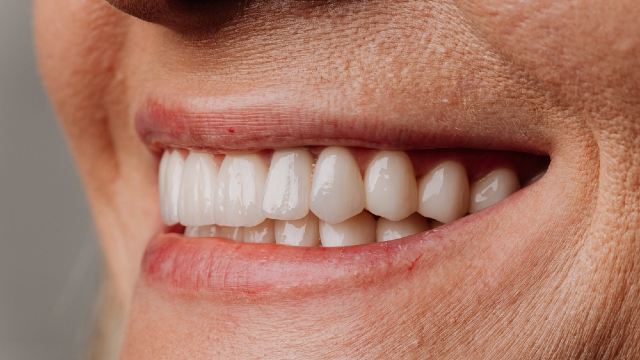
At delivery—performed under a 19-step sterilization system and filtered water protocol—restorations are tried in before permanent adhesive bonding and dynamic bite calibration. Representative outcomes appear in the before-and-after smile gallery.
Choosing a Cosmetic Dentist in Gangnam: Architectural Planning vs. Factory Veneers
For patients comparing providers for a cosmetic dentist Gangnam consultation, four practices separate individualized prosthodontic planning from high-volume package clinics:
- Direct prosthodontist wax-up and on-site ceramist: The lead prosthodontist designs the diagnostic wax-up personally and collaborates with an in-house master technician.
- Mandatory reversible trial smile: Preparation never starts before the patient approves a physical or digital Smile Preview for aesthetics and phonetics.
- Tooth-by-tooth conservation: Every tooth receives only the intervention it needs—combining Waterlase gum contouring, resin bonding,
0.1 mmno-prep laminates, or0.3 to 0.7 mmveneers. - Occlusal and travel planning: International patients should schedule
3–7 daysfor localized veneer workflows or7–14 daysin Seoul for comprehensive cases, submitting preliminary photos through the consultation booking page.
What to Confirm With the Clinic
Review these five checkpoints during your consultation:
- Facial reference documentation: How will the proposed tooth design align with my interpupillary line, facial midline, and dynamic lip curvature?
- Diagnostic wax-up authorship: Does the treating dentist personally design the diagnostic wax-up alongside an in-house master ceramist?
- Pre-preparation approval gate: Will I evaluate a physical or digital Smile Preview in my mouth before any enamel is prepared?
- Tooth-by-tooth conservation plan: Which teeth qualify for
0.1 mmno-prep veneers,0.3 to 0.7 mmminimal preparation, or full-coverage crowns (0.5 to 1.0 mm)? - Soft-tissue and bite integration: Do my gingival zeniths require Waterlase gum contouring, and how will my anterior bite guidance be protected?
Frequently Asked Questions
Can I see and adjust my new smile design before the dentist touches my natural teeth?
Yes. Through the Smile Preview and diagnostic wax-up protocol, the proposed tooth shapes and lengths are transferred onto your untouched teeth using a temporary preview material before any enamel reduction begins. You can check how the teeth look against your full face, test lip closure at rest, and speak aloud to confirm clear pronunciation before preparation starts.
How does facial-proportion smile design avoid the bulky "chicklet" veneer look?
By measuring your facial midline, interpupillary plane, and lower-lip smile arc—supported by Dr. Hanna Lee's Oral Aesthetic Measuring Ruler (Patent No. 10-1067942)—and using mock-up-guided preparation (0.1 mm no-prep or 0.3 to 0.7 mm minimal-prep), the ceramic emerges naturally from the gumline with graduated incisal translucency.
How many teeth are typically included in a facial-proportion smile makeover?
The tooth count depends on your dynamic smile width and buccal corridor display. Some patients achieve balanced harmony by treating 2 to 4 upper incisors, while patients with a wide social smile and narrow premolar arches may treat 6, 8, or 10 teeth per arch so there is no visible step in shade or contour at the corners of the mouth.
What if my gumline looks uneven or shows too much gum when I smile?
When uneven gingival zeniths make adjacent teeth appear different in height, Waterlase laser gum contouring gently sculpts the soft-tissue margin during the makeover workflow so the final ceramic veneers or crowns maintain balanced length-to-width proportions.
How many days in Seoul should I plan for a complete smile makeover?
While single CAD/CAM restorations can be completed in 1 visit and localized veneer cases take 2–3 days or 3–7 days, international patients planning a multi-tooth facial-proportion makeover should allow 7–14 days in Seoul for the 30–60 minutes 3D consultation, diagnostic wax-up and Smile Preview, custom fabrication by the in-house veneer master technician, bonding, and bite check.
Are veneers and crowns ever combined in the same smile makeover plan?
Yes. Intact teeth with healthy enamel are preserved with 0.1 mm no-prep or 0.3 to 0.7 mm minimal-prep laminate veneers, whereas a neighboring tooth that already has an old crown or root canal restoration may receive an all-ceramic crown (0.5 to 1.0 mm preparation) matched by the same in-house master ceramist.
This article is for informational purposes only and is not a self-diagnosis tool or a substitute for a clinical examination and personalized treatment plan from a licensed dentist.
More Articles
Continue reading our clinical guides.