Personalized Medical Care & Dedicated International Patient Concierge

Medical Guide
Same-Day Crowns (CEREC) in Seoul: One-Visit Dental Guide
Explore same-day crowns (CEREC) in Seoul: how digital 3D scanning, CAD/CAM design, in-house milling, and bonding work in one visit, and who qualifies.
Schedule a ConsultationSame-Day Crowns (CEREC) in Seoul: From Scan to Seat in One Visit
Medically reviewed by Dr. Hanna Lee, DDS, MSD, PhD
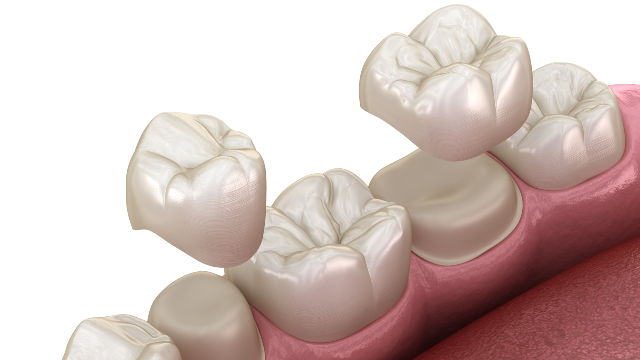
For decades, getting a dental crown meant committing to a two-stage schedule: having the tooth shaped, biting into trays of silicone putty, wearing an acrylic temporary cap while an external laboratory fabricated the restoration, and returning 1 to 2 weeks later for final cementation. While that conventional workflow remains valuable for complex multi-tooth reconstructions, digital chairside CAD/CAM dentistry has reshaped how single-tooth restorations are delivered. Patients researching same day crowns Seoul clinics offer—or traveling on a compact schedule and looking into CEREC crowns Korea practices provide—often want to know what happens inside a single-visit appointment and whether speed compromises precision or longevity.
In clinical prosthodontics, a one day dental crown is not a rushed version of a laboratory crown. Instead, it replaces physical shipping, plaster models, and manual wax-ups with optical 3D scanning, computer-aided design, and in-house robotic milling from solid, factory-sintered ceramic blocks. Equally important, a clinical guide must explain not only how the chairside workflow operates from scan to seat, but also which cases are better served by waiting for a multi-visit approach.
The Bottom Line
- A true one-visit workflow eliminates the temporary crown phase: From tooth preparation and 3D optical scanning to CAD design, in-house crown milling, glazing, and adhesive bonding, the entire CEREC crown process is completed in a single appointment lasting 1 to 3 hours.
- Sealing the tooth on the same day offers biological advantages: Receiving a crown without temporary acrylic caps avoids leaky interim cement, prevents the prepared tooth from shifting position between visits, and seals freshly prepared dentin immediately against oral bacteria.
- Industrial ceramic blocks provide consistent structural integrity: Chairside restorations are milled from homogeneous, factory-produced ceramic blocks engineered to approximately
150 MPaflexural strength—compared with roughly80 MPafor conventional hand-layered feldspathic porcelain—with clinical durability studies tracking outcomes across 20 years and up to 27 years. - Not every tooth should be rushed into a single-day protocol: Multi-unit reconstructions, teeth with active gum inflammation or unresolved root canal pathology, and complex front-tooth cases requiring manual porcelain layering should follow a staged, multi-visit schedule.
Why Traditional Crowns Take Two Visits—and What Changes With CEREC
Understanding the clinical value of a same-day workflow starts with what happens during the waiting period of a conventional crown. In a traditional 1 to 2 visit protocol spread across 1 to 2 weeks, the dentist prepares the tooth, captures an impression, and cements a provisional plastic crown using weak temporary cement so it can be removed at the next visit.
While temporary crowns protect the tooth briefly, they introduce three vulnerabilities:
- Microleakage and dentin sensitivity: Temporary cements remain soft by design. Chewing forces can break the marginal seal, allowing cold liquids and bacteria to reach freshly cut dentin tubules.
- Positional drift and bite changes: If a temporary crown wears down, chips, or loosens between visits, adjacent and opposing teeth can drift slightly, requiring extra adjustment at final seating.
- Second-visit anesthesia and tissue trauma: Removing a temporary crown, cleaning residual cement, and retracting the gumline a second time irritates healing gums and requires a second round of local anesthesia.
With an integrated chairside CAD/CAM system, external shipping is replaced by an all-digital in-house loop. At Harue Dental Clinic in Sinsa-dong, Gangnam-gu, Seoul, Dr. Hanna Lee—a prosthodontist with 30+ years of clinical experience—has utilized the Sirona CEREC CAD/CAM system continuously since 2007. Nearly two decades of clinical experience with optical scanning, virtual articulation, and chairside milling allows the team to control margin design, contact tightness, and occlusal anatomy directly at the chairside.
Step-by-Step: The CEREC Crown Process From Scan to Seat
Patients frequently ask how CEREC crown appointment length is divided and what happens in the chair. A complete single-visit restoration spans 1 to 3 hours across six clinical stages.
Stage 1: Clinical Examination, Shade Matching, and Tooth Preparation
Before tooth structure is modified, the prosthodontist evaluates digital radiographs, verifies pulp vitality or root canal integrity, and checks how opposing teeth meet. Shade selection is performed under calibrated lighting before preparation, because teeth dehydrate and appear lighter once isolated.
Under local anesthesia, decayed structure, fractured cusps, or failing fillings are removed. The prosthodontist shapes smooth, rounded internal line angles and a defined chamfer or rounded-shoulder margin to prevent stress concentration inside the milled ceramic.
Stage 2: Powder-Free 3D Optical Intraoral Scanning
Instead of filling metal trays with putty, the dentist glides a compact 3D intraoral scanner camera over the prepared tooth, adjacent teeth, and opposing arch, followed by a buccal bite scan recording how the arches interlock.
Within seconds, the software builds a high-resolution 3D model on the monitor. The prosthodontist inspects the margin 360 degrees around the tooth at high magnification and verifies occlusal clearance before milling begins.
Stage 3: Biogeneric CAD Design and Virtual Bite Analysis
Next, the Sirona CEREC CAD software analyzes neighboring and opposing teeth to propose an anatomical restoration matching natural cusp slopes and ridge height. The prosthodontist refines three parameters on screen:
- Margin tracing: Defining the exact perimeter where ceramic meets natural tooth structure.
- Proximal contact calibration: Adjusting contacts against neighboring teeth so floss snaps through cleanly.
- Dynamic occlusal mapping: Simulating jaw movements to eliminate high spots.
Stage 4: In-House Crown Milling From Solid Ceramic Blocks
Once the digital blueprint is approved, the file is sent wirelessly to the in-house Sirona CEREC milling unit. The dentist selects a solid, pre-sintered ceramic block matched to the patient's shade and translucency.
Inside the milling chamber, water-cooled diamond burs sculpt the restoration from multiple axes with micron-level accuracy. Industrial ceramic blocks pressed under standardized pressure and heat are free of internal voids that can occur when porcelain powder is stacked by hand. Factory-produced CEREC ceramic blocks achieve a flexural strength of roughly 150 MPa, compared with approximately 80 MPa for conventional hand-layered porcelain.
Stage 5: Trial Fitting, Surface Characterization, and Glazing
When milling completes, the connector sprue is smoothed away and the prosthodontist performs a dry same visit crown fitting on the prepared tooth, verifying marginal adaptation, contact tension, and bite harmony.
Once mechanical fit is confirmed, the restoration is custom-stained to replicate natural shade gradients, then fired and glazed in an in-house ceramic furnace for a smooth, plaque-resistant luster.
Stage 6: Immediate Dentin Sealing and Adhesive Bonding
All-ceramic CEREC restorations are chemically bonded to the tooth using multi-step resin adhesive protocols. The inner ceramic surface is conditioned with hydrofluoric acid and silane, while the tooth is isolated from moisture and treated with bonding resins.
Once light-cured, the resin cement forms a unified biomechanical bond between tooth and ceramic. Because freshly prepared dentin is sealed during the same visit—before oral bacteria can contaminate the dentin tubules—post-operative sensitivity is minimized. Any mild sensitivity to hot or cold typically settles within 2 to 3 days.
Comparison Table: Same-Day CEREC Crowns vs. Traditional Two-Visit Lab Crowns
Choosing between a chairside digital workflow and a conventional laboratory workflow depends on clinical anatomy, aesthetic goals, and travel logistics.
| Clinical & Logistical Factor | Same-Day CEREC Crown (One-Visit CAD/CAM) | Traditional Laboratory Crown (Two-Visit Workflow) |
|---|---|---|
| Total Appointment Schedule | Completed in 1 visit lasting 1 to 3 hours from preparation to final bonding | Requires 1 to 2 visits spread across 1 to 2 weeks while an external lab fabricates the crown |
| Impression Method | Digital 3D intraoral optical camera scan (no physical putty trays) | Physical silicone putty trays or digital scan sent to an off-site dental laboratory |
| Temporary Crown Stage | None required (crown without temporary; tooth is permanently sealed the same day) | Acrylic provisional crown worn for 1 to 2 weeks with temporary cement |
| Material Structure & Strength | Milled from solid industrial ceramic blocks (~`150 MPa` flexural strength) | Hand-layered porcelain (~`80 MPa`), pressed lithium disilicate, or laboratory zirconia |
| Documented Clinical Longevity | Backed by 20 years of clinical durability research, tracked up to 27 years | Typically lasts 10 to 15 years or longer depending on material choice and bite loads |
| Ideal Clinical Indications | Single-tooth posterior or premolar crowns, cracked teeth, failing fillings, crown replacements | Complex multi-unit bridges, full-arch bite reconstructions, deep subgingival margins |
When One-Visit Treatment Is Not Advised (Who Should Wait)
Generic dental marketing often claims every patient qualifies for a one day dental crown. In responsible prosthodontics, knowing when not to use a single-visit protocol is just as important. During a 30 to 45 minute diagnostic consultation, a prosthodontist will recommend postponing same-day placement or choosing a multi-visit workflow in four scenarios:
1. Complex Single Central Incisors Requiring Custom Hand-Layered Porcelain
While modern ceramic blocks and surface staining produce natural aesthetics for premolars, molars, and many front teeth, matching a single upper central incisor next to a tooth with complex internal mamelons and halo translucency is demanding. A master technician taking 1 to 2 weeks to hand-layer porcelain powders over a ceramic core can achieve optical depth that a milled block cannot duplicate.
2. Deep Subgingival Margins From Subsurface Fracture or Decay
Optical 3D scanners operate by line-of-sight: if the camera cannot clearly see the finish line, the software cannot trace an accurate margin. When decay or fracture extends deep beneath the gumline, teeth may require crown lengthening, tissue healing, or a staged provisional crown to contour the gums first.
3. Unresolved Endodontic Infection or Active Periodontal Disease
If a tooth with deep decay shows signs of an acute periapical infection on a radiograph, or if the patient has spontaneous pain, sealing a permanent crown in one visit is premature. Root canal therapy and symptom resolution must come first.
4. Multi-Unit Bite Collapse Requiring Staged Occlusal Testing
When a patient needs multiple crowns across the arch to restore vertical dimension lost from severe bruxism, jumping straight to permanent ceramics skips a vital step. Bite reconstruction requires wearing provisional restorations first to verify that jaw joints, muscles, and speech adapt comfortably.
Planning Your Schedule in Seoul for Same-Day Restorative Care
For international residents, business travelers, and medical visitors looking into same day crowns Seoul clinics provide, logistical predictability is essential. Even though the clinical CEREC crown process takes 1 to 3 hours in a single visit, building a small buffer into your itinerary ensures unhurried follow-up.
At Harue Dental Clinic, international patients scheduling a same-day CEREC crown are advised to plan a stay in Korea of 1 to 3 days (with a minimum window of 1–2 days). Having an extra day in Seoul allows you to eat a normal meal once anesthesia wears off and return for a brief bite refinement if any high spot becomes noticeable. You can review representative cases in our before and after gallery or schedule your evaluation through our contact page.
What to Confirm With the Clinic Before Booking a Same-Day Crown
Before scheduling a one-visit crown appointment, ask the clinic these five practical questions to ensure your tooth and timeline are a realistic match:
- How long has the prosthodontist worked with their chairside CAD/CAM system? Ask whether the dentist personally designs and checks the crown margins on the Sirona CEREC system.
- Will my tooth be evaluated with an X-ray first to confirm it qualifies for a single-visit protocol? Confirm that the clinic checks root health, remaining wall thickness, and gumline depth before promising same-day completion.
- Which ceramic block material will be used for my specific tooth position? Ask whether your tooth requires a high-strength glass-ceramic, a feldspathic block, or a multi-visit monolithic zirconia crown based on bite load.
- What happens if the dentist discovers deep decay or gum bleeding that prevents an accurate optical scan? Ensure the clinic has a backup plan—such as placing a temporary crown and converting to a 1 to 2 week workflow—rather than forcing a compromised scan.
- Is there time in my schedule 1 to 3 days after placement for a quick bite check before I fly home? Local anesthesia can mask subtle bite awareness during the placement visit.
Frequently Asked Questions
How long does a CEREC crown appointment length actually take from start to finish?
A complete single-tooth CEREC appointment takes 1 to 3 hours in 1 visit. That window covers local anesthesia, removing old fillings or decay, shaping the tooth, capturing the 3D optical scan, designing the restoration on the CAD monitor, in-house crown milling, custom staining and glazing in the ceramic furnace, and permanent adhesive bonding.
Are same-day CEREC crowns as strong and durable as traditional lab-made crowns?
Yes, when placed on appropriately selected teeth and bonded to healthy structure. Because CEREC restorations are milled from solid, factory-pressed ceramic blocks rather than hand-stacked porcelain powder, they are free of internal porosity and exhibit a flexural strength of roughly 150 MPa compared with about 80 MPa for conventional layered porcelain. Clinical research has tracked chairside CAD/CAM ceramic restorations across 20 years, with survival data extending up to 27 years.
Why is getting a crown without temporary caps better for the underlying tooth?
When a tooth is prepared for a crown, microscopic dentin tubules are exposed. In a two-visit workflow, those tubules are covered only by a plastic cap and temporary cement for 1 to 2 weeks. In a one-visit CEREC workflow, freshly prepared dentin is disinfected and permanently sealed with adhesive resin cement within hours, lowering microleakage risk and eliminating temporary crown loosening.
Does a same-day crown hurt more or cause more sensitivity afterward?
No—patients undergo local anesthesia only once instead of twice, and gums are not disturbed a second time to remove a temporary cap. Once anesthesia wears off, mild sensitivity to hot or cold drinks or slight gumline tenderness for 2 to 3 days is normal.
How many days should I stay in Seoul if I am traveling for CEREC crowns Korea clinics offer?
Although the crown is scanned, milled, and bonded in 1 visit lasting 1 to 3 hours, patients traveling from abroad should plan a stay in Korea of 1 to 3 days (or at least 1–2 days). This buffer ensures that if you notice a minor bite high spot after numbness fades, the prosthodontist can fine-tune the surface before your flight.
This article is for informational purposes only and is not a self-diagnosis tool or a substitute for a clinical examination and personalized treatment plan from a licensed dentist.
More Articles
Continue reading our clinical guides.