Personalized Medical Care & Dedicated International Patient Concierge


Medical Guide
No-Prep Laminates vs Traditional Veneers: Key Differences
Compare no-prep laminates vs traditional veneers, including tooth preparation, durability, cost, and results. Discover which option suits your smile best.
Schedule a ConsultationUnderstanding the Condition: Why Patients Seek Cosmetic Restoration

Many patients come to dental clinics wanting to correct discoloration, minor chips, uneven spacing, or worn edges that affect the appearance of their smile. Others may be dealing with enamel that has thinned over time due to grinding, acidic diet, or previous restorative work. While these concerns are largely cosmetic in nature, the treatment chosen to address them can have lasting consequences for tooth structure.
Dental tissue does not regenerate once it is removed. Unlike skin, which renews itself, or bone, which can partially remodel, enamel that is shaved away during tooth preparation is permanently gone. This is why the method of preparation — how much natural enamel is removed before a restoration is placed — matters as much as the final cosmetic result. A restoration that looks excellent on the day it is placed but requires unnecessary removal of healthy tooth structure may create long-term vulnerabilities, including increased sensitivity or a greater future reliance on restorative treatment.
This is the central distinction between no-prep laminates and traditional veneers, and it is a question patients are increasingly asking before committing to treatment. Understanding the biological trade-offs — not just the aesthetic ones — allows for a more informed decision.
What Are No-Prep Laminates and Traditional Veneers?
Traditional Veneers
Traditional porcelain veneers require a measurable amount of enamel to be reduced from the front surface of the tooth, typically in the range of 0.3–0.7 millimeters, though this varies by case. This reduction creates space for the veneer to sit flush with surrounding teeth without appearing bulky or overcontoured. The technique has been used for decades and remains effective for correcting significant discoloration, misalignment, uneven tooth length, or structural irregularities that cannot be addressed with a thinner restoration alone.
Because more of the underlying tooth is reshaped, traditional veneers offer greater flexibility in correcting the position and visual angle of teeth, which can be useful for patients with more complex aesthetic concerns.
No-Prep Laminates
No-prep, or minimal-prep, laminates are designed to be bonded directly onto the tooth surface with little to no enamel removal. Because less natural tooth structure is altered, this approach is generally considered more conservative and, in many cases, reversible in a way traditional veneers are not. The laminate is fabricated to be thin enough to bond onto the existing tooth contour without creating an unnatural bulk or ridge along the gumline.
However, this technique is not universally suitable. Its success depends heavily on the existing shape, color, and alignment of the patient's teeth, as well as the amount of space naturally available. Attempting to apply a no-prep approach to a case that truly requires structural correction can result in a restoration that looks overbuilt or feels unnatural to the tongue and lips.
Comparing the Two Approaches
| Consideration | No-Prep Laminates | Traditional Veneers |
|---|---|---|
| Enamel removal | Minimal to none | Measurable reduction required |
| Reversibility | Generally more reversible | Typically irreversible |
| Best suited for | Mild discoloration, minor gaps, well-aligned teeth | Significant discoloration, misalignment, structural correction |
| Sensitivity after treatment | Usually minimal | Possible short-term sensitivity |
| Aesthetic flexibility | More limited | Greater correction capability |
This comparison is a general guide rather than a fixed rule, since individual anatomy plays a significant role in determining which option is appropriate.
Candidate Suitability: Who Benefits From Each Option

Not every patient is a suitable candidate for no-prep laminates. Ideal candidates typically have:
- Teeth that are relatively well-aligned to begin with
- Minimal existing discoloration or thin enamel wear
- Adequate space for a thin laminate layer without an unnatural bulge
- Healthy gum tissue and no active decay at the treatment site
Patients with more pronounced spacing issues, significant discoloration, rotated teeth, or structural irregularities such as chipped or shortened teeth may be better suited to traditional veneers, which allow for greater correction but require some enamel reduction. Patients with a history of teeth grinding (bruxism) may also need additional evaluation, as excessive bite force can affect the longevity of either type of restoration regardless of which is chosen.
A thorough clinical evaluation — including a review of bite alignment, enamel thickness, gum health, and aesthetic goals — is necessary before recommending either option. At Harue Dental Clinic, this evaluation is paired with a hands-on wax-up, allowing the case to be visualized in physical form before any irreversible steps are taken. This step gives both the doctor and the patient a clearer picture of how the final result will look and function, reducing the likelihood of mismatched expectations.
The Treatment Process at Harue Dental Clinic
Harue Dental Clinic's approach to both no-prep laminates and traditional veneers is shaped by an in-house digital dental laboratory, introduced in October 2007. This system connects diagnosis, digital design, and prosthetic fabrication in a single streamlined workflow, which has made same-day completion possible for many cases that would otherwise require multiple visits and temporary restorations.
Step 1: Diagnosis and Digital Planning
Each case begins with a personal evaluation by the treating doctor, supported by digital imaging and a case-specific wax-up. This step allows the final shape and proportion of the restoration to be reviewed before any tooth preparation occurs, and gives the patient an opportunity to discuss adjustments to shape, length, or shade before fabrication begins.
Step 2: Minimal or No Preparation
Using index-guided preparation techniques, only the minimum amount of enamel required for the chosen approach is removed. For no-prep cases, this step may be skipped entirely or limited to light polishing to improve bonding surface quality. This index-guided method helps standardize outcomes and reduces the risk of over-preparation.
Step 3: In-House CAD-CAM Fabrication
Because design and fabrication occur within the same facility, laminates and all-ceramic restorations can often be completed and fitted within a single visit, reducing the need for temporary restorations, additional anesthesia visits, or repeat appointments. This workflow also allows for fine adjustments to shade and translucency to be made quickly if the initial fit requires refinement.
Step 4: Fitting and Final Adjustment
The restoration is checked for fit, contact with neighboring teeth, bite alignment, and natural appearance under different lighting conditions before final bonding. Occlusal adjustments are made as needed to ensure the restoration integrates comfortably with the patient's existing bite.
Doctor's Expertise: A Philosophy Built Over Three Decades
Treatment planning and diagnosis at Harue Dental Clinic are handled personally by Dr. Hanna Lee, who has practiced implantology and aesthetic dentistry since graduating second in her class from Pusan National University College of Dentistry in 1994. Her clinical approach has been shaped by ongoing academic involvement, including work as a doctoral candidate in implantology at the Catholic University of Korea and adjunct teaching responsibilities in the same department.
Dr. Lee is the author of The DaVinci Dental Contouring Atlas (2006), a clinical framework addressing tooth contouring and proportion — concepts directly relevant to designing laminates and veneers that appear natural rather than artificial. Her long-standing preservation-first philosophy, formalized in 2002, continues to guide case selection between minimally invasive and traditional restorative techniques, and reflects a broader clinical principle: that aesthetic improvement should not come at the expense of long-term tooth health.
Hospital Strengths: Why Technology and Philosophy Matter Together
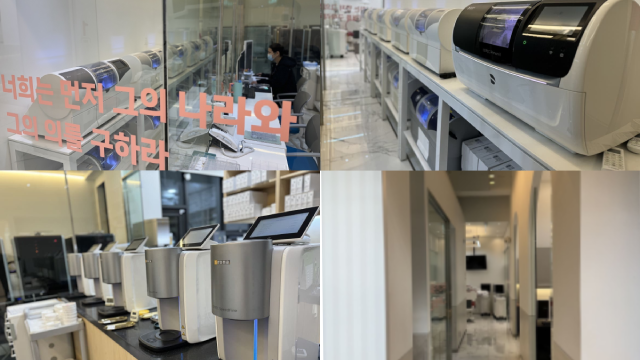
Harue Dental Clinic's ability to offer both traditional veneers and no-prep laminates within a same-day framework stems from its integrated digital infrastructure. The clinic's CEREC and CAD-CAM systems, in use since 2007, have been referenced in Korean dental industry publications for their role in advancing digital workflow adoption within the country.
This infrastructure supports:
- Reduced need for temporary restorations
- Greater consistency between digital design and final output
- Shorter overall treatment timelines for eligible cases
- More precise shade-matching through digital design tools
Importantly, the clinic emphasizes that only clinically necessary procedures are recommended, with treatment costs communicated transparently before care begins. This approach is intended to support informed decision-making rather than encourage more extensive treatment than a patient's case requires.
Recovery, Safety, and Realistic Outcomes
Recovery from both no-prep laminates and traditional veneers is generally straightforward, though patients may experience mild sensitivity for a short period, particularly after enamel reduction exposes the underlying dentin layer. No-prep laminates, due to their conservative nature, typically involve less post-treatment sensitivity, since less of the tooth's protective enamel layer is disturbed.
In the days following treatment, patients are generally advised to avoid biting directly into very hard foods and to maintain consistent oral hygiene, including regular brushing and flossing around the margins of the restoration. Routine dental check-ups remain important after either procedure, as they allow early identification of any wear, chipping, or marginal issues before they become more significant.
Long-term outcomes depend on proper oral hygiene, avoiding excessive bite force on restorations, and attending follow-up evaluations. Neither option is guaranteed to be permanent — porcelain restorations of any type may eventually require replacement or maintenance over time, generally after many years of normal use, and patients should discuss realistic expectations with their treating doctor before proceeding. Factors such as diet, grinding habits, and overall oral health can all influence how long a restoration performs well.
Making an Informed Decision
Choosing between no-prep laminates and traditional veneers is not simply a matter of preference — it depends on individual tooth structure, alignment, enamel condition, and aesthetic goals. A careful diagnostic process, supported by digital planning and an experienced clinical eye, helps ensure the chosen approach preserves as much natural tooth structure as possible while meeting the patient's aesthetic needs. Patients considering either option are encouraged to seek a personalized consultation, as photographs and general information can only provide a partial picture of what is achievable in an individual case.
Visit Harue Dental Clinic
Address: 41-11 Gangnam-daero 162-gil, Gangnam-gu, Seoul (Sinsa-dong, Haru-e Dental Building)
Hours: Monday–Friday 09:00–17:25 | Saturday 08:30–12:30 (reservation only)
More Articles
Continue reading our clinical guides.