Personalized Medical Care & Dedicated International Patient Concierge

Medical Guide
Dental Implants in Korea vs the USA: Quote Breakdown Guide
Compare dental implants in Korea vs the USA by itemizing 3D imaging, titanium fixture surgery, custom abutments, zirconia crowns, and follow-up care.
Schedule a ConsultationDental Implants in Korea vs the USA: What Americans Actually Pay and What a Quote Should Include
Medically reviewed by Dr. Hanna Lee, DDS, MSD, PhD
When American patients research dental implants Korea vs USA cost, the first obstacle they encounter is rarely a lack of numbers—it is that the numbers being compared almost never represent the same clinical scope. In the United States, a dental implant is frequently billed as a sequence of separate specialist and restorative procedures spread across multiple offices, whereas many clinics in South Korea present an integrated package that groups surgical placement and prosthetic restoration under one roof. Without an itemized framework showing how each stage of care is defined and billed, an apparent price gap can either hide missing components or obscure genuine structural efficiencies.
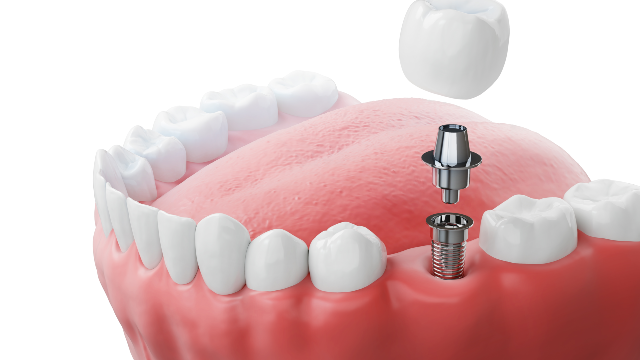
Understanding how much are dental implants in Korea compared with domestic care requires breaking a single-tooth restoration down into its five clinical building blocks: three-dimensional diagnostic imaging, surgical placement of the titanium fixture, fabrication of a stock or custom titanium abutment, milling and finishing of the final crown, and structured post-operative follow-up. At Harue Dental Clinic in Gangnam-gu, Seoul, founded in 1995 and led by Director Dr. Hanna Lee, implant planning, custom titanium abutment design, and in-house zirconia crown fabrication are coordinated by a single clinician rather than split between separate surgical and restorative practices. This guide walks U.S. patients through a line-by-line quote comparison methodology so you can evaluate domestic and international treatment proposals on an equal clinical footing.
The Bottom Line
- Compare complete tooth restorations, not isolated fixtures: A valid dental implant price comparison by country must include 3D diagnostic imaging, surgical fixture placement, the connecting abutment, the definitive crown, and post-operative follow-up checks rather than the surgical screw alone.
- Unbundled U.S. billing vs. integrated Seoul workflows: Domestic treatment often divides care between an oral surgeon or periodontist (for extractions, grafting, and fixture placement) and a general dentist or prosthodontist (for the abutment and crown), generating separate diagnostic and laboratory fees at each handoff.
- In-house digital fabrication changes cost structure and turnaround: Clinics operating an on-site CAD/CAM laboratory—such as Harue Dental Clinic, which introduced its CEREC digital prosthetic workflow in 2007—eliminate third-party commercial laboratory markups and physical impression shipping steps.
- Component specifications matter as much as line items: Always verify whether a quote specifies a custom-milled titanium abutment versus a prefabricated stock connector, and whether the final restoration is a metal-free zirconia crown or a porcelain-fused-to-metal (PFM) unit.
- Factor travel and two-trip vs. single-trip timelines into total expenditure: Because biological bone integration (osseointegration) typically requires at least 2 to 3 months before definitive loading in standard cases, international patients must weigh airfare, lodging in Seoul, and visit scheduling alongside clinical fees.
Why Comparing Dental Implant Quotes Between the U.S. and Korea Is Often Misleading
Patients asking are dental implants cheaper in Korea frequently start by comparing headline figures found on clinic websites or medical travel forums. However, in restorative dentistry, the phrase "one dental implant" has two different meanings depending on who writes the estimate:
- The surgical definition (fixture only): Strictly speaking, the dental implant is only the biocompatible titanium root fixture inserted into the jawbone. A quote written by a surgical specialist in the United States—or an introductory promotional listing abroad—may cover only this titanium post, leaving out the diagnostic 3D scan, the abutment connector, and the visible crown.
- The full-restoration definition (fixture + abutment + crown): From a patient's perspective, tooth replacement is only complete when a functional, shade-matched crown is attached to the integrated implant via an abutment and adjusted to the bite.
When comparing dental implants Seoul cost against a treatment plan from a U.S. provider in Los Angeles, New York, San Francisco, Houston, or Chicago, the primary source of confusion is unbundled billing. In a conventional U.S. referral model, a patient might visit a general dentist for an initial exam, receive a referral to an oral surgeon or periodontist for a cone-beam computed tomography (CBCT) scan and titanium fixture surgery, wait several months for healing, and then return to the general dentist for physical or optical impressions, an outsourced commercial lab abutment, and crown seating. Each practice issues its own treatment estimate with separate facility, consultation, and laboratory charges.
By contrast, comprehensive implant centers in Seoul typically structure their workflows so that a single clinical team manages both surgical placement and prosthetic restoration. At Harue Dental Clinic's practice in Gangnam-gu, Dr. Hanna Lee—who has 30+ years of clinical experience and has placed 90,696 cumulative implants as of September 2025—oversees the entire sequence from 3D navigation-guided surgical planning to custom titanium abutment design and in-house zirconia crown fabrication. Because surgical positioning and prosthetic emergence profile are planned together and milled in an on-site digital laboratory, the quote structure reflects a unified workflow rather than multiple independent practices billing separately.
The Five Core Components of a Complete Single-Implant Quote
To perform an accurate dental implant cost breakdown abroad and compare it with a domestic U.S. treatment plan, every estimate should be audited across five mandatory clinical categories. If any of these five elements is missing or listed as "determined later," the quote is incomplete.
| Quote Category | Clinical Role in Tooth Replacement | Common U.S. Billing Structure | Integrated Seoul Clinic Structure (Harue Dental Clinic Workflow) | Key Questions to Ask Before Accepting a Quote |
|---|---|---|---|---|
| 1. Diagnostic & 3D Imaging | Evaluates jawbone height, width, density, nerve pathways, sinus borders, and adjacent roots | Often billed per scan (panoramic X-ray plus separate CBCT fee) at the surgical office | 3D imaging and navigation-guided planning conducted on-site to map bone and prosthetic angles | Does the estimate include both initial 3D bone mapping and post-placement verification scans? |
| 2. Surgical Fixture Placement | Places the biocompatible titanium root into the prepared jawbone site under local anesthesia | Billed by the surgeon per tooth site; anesthesia or sedation billed as separate line items | Performed by Dr. Hanna Lee using navigation-guided or index-guided placement and the Ankylos implant system | Which implant system is used, and does the surgical fee include local anesthesia and suture removal? |
| 3\. Connecting Abutment | Links the internal implant fixture beneath the gumline to the visible replacement crown | Billed separately during the restorative phase; custom CAD/CAM abutments carry an added lab fee | Custom titanium abutment designed specifically for the individual implant and gumline contour | Is the quoted connector a prefabricated stock abutment or a patient-specific custom titanium abutment? |
| 4\. Definitive Implant Crown | Restores chewing function, bite alignment, shade, and natural tooth contour | Billed separately by the restoring dentist; outsourced to an external dental laboratory | Metal-free zirconia implant crown digitally designed, milled, and finished in the in-house CEREC lab | Is the crown fabricated from metal-free zirconia or PFM, and are chairside shade refinements included? |
| 5\. Follow-Up & Bite Checks | Monitors soft-tissue healing, bone integration stability, and occlusal force distribution | Post-surgical checks covered for a brief window; restorative adjustments may incur per-visit fees | Coordinated follow-up to evaluate gum health, implant stability, crown fit, and bite comfort | How many post-surgical and post-restorative follow-up visits are included in the treatment plan? |
1. Diagnostic Consultation and 3D Bone Assessment
Safe implant dentistry begins with three-dimensional volumetric imaging to measure the height, width, and density of the alveolar bone, as well as the proximity of the inferior alveolar nerve in the lower jaw or the maxillary sinus floor in the upper jaw.
When reviewing what is included in an implant quote, check whether the diagnostic fee covers:
- Clinical examination of the missing or failing tooth site, adjacent teeth, and periodontal tissue health.
- 3D imaging to evaluate bone volume and density and determine whether the implant can be placed directly into native bone.
- Digital surgical mapping—such as Harue Dental Clinic's navigation-guided planning, used since 2002 and registered as "Navigation Implant" with the Korean Intellectual Property Office in 2007—which aligns the planned implant angle and depth with the future crown before surgery begins.
2. Surgical Placement of the Titanium Implant Fixture
The surgical line item covers the preparation of the osteotomy site and the insertion of the titanium fixture into the jawbone. For a single front-tooth or posterior implant, surgical placement under local anesthesia typically takes about 60 to 90 minutes depending on site anatomy.
When auditing the surgical section of a quote, look beyond the base placement charge:
- Implant fixture brand: Confirm that the clinic uses an internationally recognized implant platform with long-term clinical research, such as the Ankylos implant system utilized at Harue Dental Clinic, where Dr. Hanna Lee has served as an Asian advisor and clinical research partner since 2008, or Osstem Implant, where she serves as a research advisor.
- Navigation or index guidance: Ask whether computer-assisted surgical planning or an index-guided placement technique is included in the surgical fee or charged as an optional upgrade.
- Anesthesia modality: Local anesthesia is standard to numb the surgical site during fixture placement. If sedation is requested for dental anxiety, clarify how sedation monitoring is itemized.
3. Custom Titanium Abutment vs. Stock Abutment
One of the most overlooked drivers of implant abutment and crown cost is the distinction between a stock (prefabricated) abutment and a custom-designed titanium abutment. Because implant fixtures are cylindrical while natural tooth roots and gumlines have scalloped contours, the transition from the implant platform to the base of the crown shapes both soft-tissue health and visual aesthetics.
- Stock abutments: Mass-produced in standard cylindrical sizes. A stock abutment does not match an individual patient's specific gumline architecture, which can leave subgingival margins where residual cement is harder to clean or create an unnatural crown profile.
- Custom titanium abutments: Digitally designed and milled for the exact angle, depth, and soft-tissue contour of the patient's implant site. At Harue Dental Clinic, every zirconia implant crown and front-tooth implant restoration incorporates a custom titanium abutment rather than a standard stock piece, supporting the surrounding gum tissue and providing a precise titanium-to-titanium interface with the implant fixture.
When comparing U.S. and Korean quotes, always verify that both estimates specify a custom abutment rather than comparing a custom CAD/CAM abutment against a generic stock post.
4. The Definitive Implant Crown: Zirconia vs. PFM and In-House Fabrication
Historically, many implant restorations used porcelain-fused-to-metal (PFM) crowns, which layer tooth-colored porcelain over a cast metal substructure. While functional, PFM crowns limit light transmission and can reveal a dark or gray metallic line along the gum margin if the soft tissue recedes.
Modern restorative quotes increasingly specify metal-free all-ceramic restorations—primarily zirconia implant crowns. At Harue Dental Clinic, the restorative workflow uses 3D camera imaging (supported by 17 digital scanning units, including 5 PrimeScans and 12 Omnicams), 3D digital design software, and 24 in-house milling units to fabricate zirconia crowns directly within the clinic. This in-house clinic-and-laboratory integration affects a patient's quote and experience in three ways:
- No external commercial lab surcharge: Operating an integrated in-house digital laboratory removes third-party shipping and external laboratory vendor markups.
- Direct doctor-led design: Dr. Hanna Lee personally oversees the digital crown design, coordinating tooth proportion, shade, translucency, and gumline contour with the patient's natural dentition.
- Chairside refinement before final placement: Because ceramic processing equipment is on-site, shade accuracy, translucency, contact points, and bite alignment can be evaluated chairside and refined before final cementation.
5. Post-Operative Follow-Up and Occlusal Adjustments
The final element of a complete quote covers post-placement monitoring. After surgical placement, the clinic checks soft-tissue healing and early fixture integration. Once osseointegration is confirmed and the custom abutment and zirconia crown are seated, follow-up appointments verify gum health around the crown margin and confirm that biting forces are balanced across the dental arch.
Conditional Procedures That Can Change Any Implant Quote
Even when a base single-implant quote includes all five core components, biological factors discovered on 3D imaging can add conditional procedures.
Bone Grafting vs. Graftless Implant Planning
When a tooth has been missing for an extended period or was lost due to periodontal bone loss or trauma, the jawbone ridge may resorb. In many conventional treatment plans, bone grafting or sinus augmentation is automatically added as a preliminary line item—increasing both the surgical fee and the healing timeline.
Through 3D volumetric imaging and navigation-guided planning, Harue Dental Clinic evaluates the height, width, and density of the patient's existing native bone before recommending augmentation. Where 3D imaging confirms that available bone volume and density are sufficient—or where navigation-guided planning allows the implant trajectory to avoid compromised or inflamed areas of bone—an implant without bone grafting can be placed directly into the native bone using an index-guided, minimally invasive technique. Conversely, if 3D imaging shows that native bone cannot safely stabilize an implant, bone augmentation is planned beforehand or simultaneously so long-term stability is protected.
Tooth Extraction and Provisional Restorations
If the failing tooth is still present in the socket, ask whether surgical extraction is itemized separately. Similarly, for visible front-tooth implants or full-arch cases (All-on-4 or All-on-6 configurations), clarify how temporary provisional teeth are billed while the titanium fixtures integrate with the jawbone over the 2 to 3 month healing window.
Calculating Total Out-of-Pocket Expenditure for U.S. Patients Traveling to Seoul
A realistic assessment of dental implants Korea vs USA cost must account for international travel logistics and the biological timeline of osseointegration.
| Cost & Logistics Category | Single-Visit / Same-Day Eligible Restorative Cases | Two-Stage Implant Cases (Standard Osseointegration Schedule) | Practical Planning Notes for U.S. Patients |
|---|---|---|---|
| Clinical & Restorative Scope | Crown replacements, same-day CEREC crowns (1 to 3 days), or selected immediate-loading / same-day front-tooth cases when bone density permits | Single or multiple implants requiring 2 to 3 visits across a 3 to 6 month window, or full-arch cases completed in 4 visits over 4 to 6 months | Eligibility for immediate loading vs. staged healing is determined strictly by 3D bone density and primary implant stability |
| Airfare (U.S. to Incheon ICN) | One round-trip flight from major U.S. hubs (Los Angeles, New York, San Francisco, Houston, Chicago) | Two round-trip flights (Trip 1 for surgical placement; Trip 2 after 2 to 3 months for final custom abutment and zirconia crown) | Booking flexible return dates allows your surgeon to complete post-operative checks before clearance to fly |
| Accommodation & Local Transit in Gangnam | Short stay near Sinsa-dong, Gangnam-gu during consultation, digital scanning, in-house milling, and bite check | Initial stay of several days until swelling stabilizes (typically 2 to 3 days before flying home for single implants), plus a return stay | Harue Dental Clinic is located at 41-11, Gangnam-daero 162-gil, Gangnam-gu, Seoul, accessible via airport railroad, bus, or taxi from ICN |
Why Single-Implant vs. Multi-Implant or Full-Arch Cases Scale Differently
Travel overhead—flights, hotel nights in Gangnam-gu, and airport transfers—is a fixed expense per trip regardless of how many teeth are treated during that visit:
- For a single straightforward implant: If your bone condition requires a conventional two-stage healing protocol (Trip 1 for surgical placement; a 2 to 3 month osseointegration interval; Trip 2 for the custom titanium abutment and in-house zirconia crown), two round-trip flights can offset a substantial portion of the clinical fee difference unless you are already visiting Seoul or combining additional dental care.
- For multiple implants, front-tooth cases, or full-arch restorations: When a patient requires multiple implants, combined same-day CEREC crowns or laminates on adjacent teeth, or full-arch restoration (All-on-4 or All-on-6 with same-day temporary prostheses under an immediate-loading protocol), the clinical scope expands while travel overhead remains fixed. You can review documented cases in the before-and-after gallery and read international patient experiences on the patient reviews page.
Using Remote Pre-Consultation to Request a Transparent Estimate
Before booking flights to South Korea, U.S. patients can contact Harue Dental Clinic's English-speaking international coordinator team (led by coordinator Jeon Jin-mi) via the online consultation and contact page, email (info@haruedentalclinic.com), overseas inquiry phone (+82 2 543 0037), or WhatsApp (+1 208-825-7756). Sharing recent panoramic X-rays or 3D CT files allows the clinic to outline expected diagnostic steps, discuss whether a single-stage or staged visit schedule is realistic for your anatomy, and clarify what an individualized treatment plan will cover once confirmed by in-person 3D imaging in Seoul.
Frequently Asked Questions
Why do dental implant quotes vary so widely between clinics in the U.S. and Korea?
Quote variations usually stem from two factors: whether the estimate covers only the surgical titanium fixture or the complete restoration (including 3D imaging, custom titanium abutment, and zirconia crown), and whether the clinic fabricates prosthetics in an in-house digital laboratory or outsources them to third-party commercial labs across multiple specialist offices.
What should always be itemized in a dental implant quote before I travel abroad?
A transparent quote should clearly specify diagnostic 3D imaging, surgical placement of the titanium fixture (including the implant brand and anesthesia), whether a custom titanium abutment or stock abutment is used, the material and fabrication method of the final crown (such as an in-house milled zirconia crown), any conditional procedures like tooth extraction or bone grafting, and post-operative follow-up visits.
Does every dental implant patient need to pay for a bone graft?
No. While patients with insufficient bone volume or density require bone augmentation for safe stability, patients whose 3D imaging confirms adequate native bone height, width, and density may qualify for implant placement without bone grafting. At Harue Dental Clinic, navigation-guided 3D assessment is used to evaluate whether existing bone can safely support direct fixture placement without a separate grafting procedure.
Why does a custom titanium abutment matter when comparing implant prices?
A stock abutment is a mass-produced cylinder that may not match the natural scalloped contour of your gumline. A custom titanium abutment is digitally designed for your specific implant angle and soft-tissue margin, helping support healthy gum architecture and proper bite force distribution beneath a metal-free zirconia crown.
Can a dental implant in Seoul be completed in a single trip from the United States?
It depends on your bone density, site condition, and treatment type. While selected front-tooth cases or same-day immediate-loading protocols can attach a provisional or restorative tooth during the initial visit when primary stability is sufficient, standard implant treatment requires 2 to 3 visits across a 3 to 6 month window (and full-arch cases typically require 4 visits over 4 to 6 months) so the titanium fixture can fully integrate with the jawbone before definitive crown placement.
Can I use my U.S. dental insurance or receive treatment records for reimbursement?
International patients typically pay directly at the treating clinic in Seoul and should confirm accepted payment methods and out-of-network claim rules with their U.S. insurer before travel. Harue Dental Clinic provides translated documents and treatment records—including imaging and procedural details—that patients can share with their domestic dentist or insurance carrier upon returning home.
This article is for informational purposes only and is not a self-diagnosis tool or a substitute for a clinical examination and personalized treatment plan from a licensed dentist.
More Articles
Continue reading our clinical guides.