Personalized Medical Care & Dedicated International Patient Concierge

Medical Guide
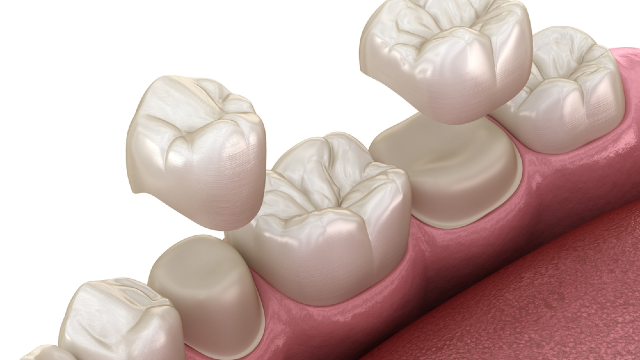
Crown Replacement in Seoul: Old, Cracked & Dark-Margin Guide
Planning dental crown replacement in Seoul? Learn when to replace an old dental crown, a cracked restoration, or a crown with a dark line at the gumline.
Schedule a ConsultationCrown Replacement in Seoul: Old, Cracked or Dark-Margin Crowns and When to Replace Them
Medically reviewed by Dr. Hanna Lee, DDS, MSD, PhD
The Bottom Line
- Distinguish minor surface chips from structural or biological failure: While a tiny, superficial porcelain chip on an otherwise sealed restoration can sometimes be smoothed or conservatively repaired in the chair without removing the crown, structural fractures, loose cement seals, open margins, recurrent decay, or an exposed metal collar require full dental crown replacement Seoul care.
- Dark gumline shadows come from older metal substructures: A crown with dark line at gumline tissues is typically an aging porcelain-fused-to-metal (PFM) restoration whose opaque metal collar has become visible after mild gingival recession. Replacing it with a metal-free zirconia or all-ceramic CEREC restoration restores natural light transmission at the gum margin.
- Every replacement crown should be redesigned, never blindly copied: At Harue Dental Clinic in Sinsa-dong, Gangnam-gu, Director Dr. Hanna Lee (
DDS, MSD, PhD) removes the failing restoration under local anesthesia, inspects the underlying natural tooth or implant abutment, and captures a fresh 3D optical scan (PrimeScanorOmnicam) so the new crown fits your current gumline and bite. - A new crown cannot rescue an unsalvageable root: If removing an old crown reveals deep subgingival decay below the gumline, a vertical root fracture, or severe periodontal bone loss, placing another cap over the tooth will fail. Foundational restorative care or a dental implant must be completed first.
Why Dental Crowns Age—and Why Timing Matters for Replacement
A well-crafted dental crown protects a weakened tooth from biting forces for many years, yet no prosthetic restoration is immune to mechanical fatigue, cement washout, or biological changes in the surrounding gums. Longitudinal practice-based cohort studies indexed on PubMed through the National Library of Medicine demonstrate that while full-coverage crowns achieve strong multi-year survival rates, the risk of porcelain chipping, marginal gap formation, secondary caries, and periodontal recession rises steadily after a decade of daily chewing cycles.
Many international patients and Seoul residents postpone having an aging restoration evaluated because the tooth does not hurt. Unfortunately, pain is a late indicator when dealing with a crowned tooth:
- Silent marginal leakage: When the microscopic luting cement seal along the bottom edge of an old crown washes out or develops a gap (
worn crown margin), oral bacteria and fermentable carbohydrates seep between the inner crown wall and the prepared dentin. Because the opaque ceramic or metal shell blocks visual inspection—and blocks conventional X-rays from showing early decay hidden behind metal—cavities can hollow out the supporting tooth core long before the nerve becomes inflamed. - Root canal masking: If the crowned tooth previously underwent endodontic (root canal) treatment, the internal dental pulp has already been removed. Without nerve fibers to transmit cold or sweet sensitivity, extensive recurrent decay can progress below the gumline without triggering a single twinge of toothache until the entire crown loosens or snaps off.
- Opposing tooth wear and occlusal drift: Older crowns with rough, unpolished porcelain surfaces or fractured cusps alter how your upper and lower arches meet, concentrating excessive load on adjacent teeth or the temporomandibular joints.
Scheduling a structured diagnostic evaluation to replace old dental crown work before an acute fracture or infection occurs preserves maximum healthy dentin and keeps your treatment timeline predictable—especially when visiting Seoul on a fixed travel schedule.
Five Clinical Signs That an Existing Crown Needs Attention
When patients visit Harue Dental Clinic in Sinsa, Gangnam, seeking advice on an aging restoration, their concerns generally fall into five distinct clinical patterns. Understanding what each sign indicates helps you know whether you are looking at a cosmetic refresh, a urgent structural replacement, or deeper foundational care.
1. A Dark or Gray Line Along the Gum Margin
If you notice a crown with dark line at gumline contours—especially on an upper front incisor, canine, or premolar that looked natural when it was placed ten or fifteen years ago—you are almost certainly looking at a porcelain-fused-to-metal (PFM) crown. PFM restorations rely on a cast metal substructure covered by a layer of feldspathic porcelain. Look closely at why the margin darkens over time:
- To prevent the dark metal core from showing through, technicians had to mask it with an opaque porcelain layer, which blocks natural light from passing through the tooth neck and creates a flat, chalky appearance.
- Where the crown meets the gum, a thin bevel of metal sits just beneath the gingival sulcus. As gums naturally mature or recede by even half a millimeter over the years, that dark metal edge becomes exposed, casting a gray or bluish-black shadow through thin gum tissue.
- Upgrading through PFM crown replacement to a 100% metal-free zirconia or all-ceramic CEREC restoration eliminates the metal collar altogether, allowing light to scatter naturally into the root and gingiva.
2. Cracked, Chipped, or Fractured Ceramic
A cracked crown replacement evaluation starts by determining how deep the fracture runs. When outer veneering porcelain chips off a PFM or layered ceramic crown, it leaves sharp, jagged edges that irritate your tongue and lips and trap dental plaque. If a vertical crack propagates all the way through a monolithic ceramic or zirconia crown, saliva and bacteria gain a direct highway to the underlying tooth core, making full removal and replacement mandatory.
3. A Loose, Shifting, or Clicking Crown
A loose crown replacement is never a "wait and see" situation. If a crown rocks slightly when you press it with your finger, clicks when you chew sticky foods, or emits a persistent bad taste or odor when you floss around it, the internal cement seal has failed. Even if the crown stays on the tooth because of friction, saliva is pumping in and out beneath the restoration with every bite, rapidly softening the underlying tooth structure.
4. Open, Rough, or Catching Margins
When your dentist runs a fine diagnostic explorer along the junction where the crown meets your natural tooth, the transition should feel smooth and continuous. If dental floss shreds, catches on an overhanging ledge, or slips into a gap beneath the crown edge, that worn crown margin acts as a plaque trap that triggers localized gum bleeding, chronic gingival inflammation, and root-surface caries.
5. Shade Mismatch or Unnatural Bulky Contours
Even when an older crown remains mechanically intact, changes in the shade of your neighboring natural teeth—or an older opaque fabrication style that looks overly thick and monochromatic—can make a single crowned tooth stand out in every photograph. Replacing the outdated prosthesis with a custom-shaded, anatomically contoured ceramic restoration brings the tooth back into visual harmony with your smile.
Repair in Place vs. Full Crown Replacement vs. Foundational Care First
Not every damaged crown requires immediate sectioning and removal, and not every failing crowned tooth can be fixed by simply cementing a new cap. During your consultation at Harue Dental Clinic, Director Dr. Hanna Lee (DDS, MSD, PhD) uses intraoral microscopy, digital radiography, and 3D optical scanning to categorize your tooth into one of three clinical pathways.
| Clinical Finding | Recommended Pathway | What the Procedure Involves | Typical Visit Schedule in Seoul |
|---|---|---|---|
| Minor superficial porcelain chip (intact marginal seal, no caries, stable bite, healthy gums) | Conservative Chairside Repair & Polishing | Smoothing sharp ceramic edges with fine diamond abrasives or bonding composite resin to a small non-load-bearing defect without removing the crown | 1 visit (30 to 60 minutes) |
| Structural crack, worn/open margin, recurrent decay in coronal dentin, loose seal, or dark PFM gumline (healthy root and bone support) | Full Crown Removal & Digital Crown Redesign | Sectioning the old crown under local anesthesia, cleaning/rebuilding the core, 3D intraoral scanning (PrimeScan/Omnicam), CAD design, in-house milling, and adhesive bonding |
1 visit (same-day CEREC workflow) or 1 to 3 days / 1 to 2 visits depending on case complexity |
| Extensive subgingival decay below the gumline, root fracture, severe periodontal bone loss, or failed root canal | Foundational Treatment or Dental Implant First | Periodontal therapy, endodontic retreatment, core buildup, or atraumatic extraction and implant placement before any final prosthetic crown is fabricated | Staged care (1 to 2 weeks for endodontic/core foundation, or multi-month healing for implant osseointegration) |
Clinical Preservation Principle: Dr. Hanna Lee's treatment philosophy always begins with preserving your natural tooth structure whenever biologically reasonable. However, placing a brand-new ceramic crown over a tooth with deep subgingival decay or inadequate root support only masks an active problem. If the biological foundation beneath an old crown is compromised, stabilizing the root and gums—or transitioning to an implant when the root cannot be saved—protects your health and prevents repeat prosthetic failure.
Step-by-Step: How Crown Replacement and Redesign Work at Harue Dental Clinic
Replacing an existing crown is technically more demanding than placing a crown on a tooth for the first time. Until the old restoration is physically removed, no dentist can see the exact three-dimensional condition of the underlying core. At Harue Dental Clinic in Sinsa-dong (41-11, Gangnam-daero 162-gil, Gangnam-gu, Seoul, near Sinsa Station), every replacement follows a disciplined six-step clinical protocol led personally by Director Dr. Hanna Lee.
Step 1: Radiographic & Occlusal Assessment
Before touching the old crown, Dr. Hanna Lee evaluates periapical and panoramic digital radiographs to inspect the root apex, the bone crest level around the tooth, the presence of any existing root canal filling or post, and the approximate fit of the current crown margins. Your static bite and dynamic chewing movements are also recorded so the replacement restoration can correct any high spots or interferences that contributed to the old crown cracking.
Step 2: Atraumatic Removal of the Old Restoration Under Local Anesthesia
Under comfortable local anesthesia, Dr. Hanna Lee uses high-precision rotary instruments to create a narrow channel through the porcelain and metal or ceramic core of the old crown, gently spreading the segments apart so the prosthesis lifts off without applying excessive torque to your natural tooth root or implant abutment. Every instrument used during the procedure passes through Harue Dental Clinic's 19-step sterilization and infection-control system.
Step 3: Core Inspection, Caries Removal, and Margin Refinement
Once the old crown is off, the tooth beneath is thoroughly cleaned and inspected under magnification:
- Any softened dentin, stained old cement, or leaky core buildup material is removed.
- If the remaining natural tooth walls are sound, a fresh bonded composite core buildup is placed to replace missing internal structure, and the preparation margin is refined conservatively (
0.5 to 1.0 mmspace for all-ceramic zirconia crowns). - If the old crown sat on a dental implant abutment, the internal screw channel and abutment collar are inspected and cleaned.
Step 4: Optical 3D Intraoral Scanning (No Putty Trays)
Instead of filling your mouth with heavy polyvinyl siloxane impression putty, the team captures a high-resolution optical scan of the cleaned tooth, the adjacent contact points, the gingival sulcus, and the opposing arch using Harue Dental Clinic's digital intraoral scanners (5 PrimeScans and 12 Omnicams across 17 digital imaging units). Peer-reviewed clinical research confirms that digital intraoral scanning achieves accurate marginal fit while significantly improving patient comfort.
Step 5: Custom 3D Crown Redesign & In-House Milling
Rather than duplicating the shape of the failing crown, Dr. Hanna Lee performs a complete crown redesign on the 3D CAD workstation. Since introducing the CEREC CAD/CAM digital prosthetic system and establishing an in-house dental laboratory in 2007, Harue Dental Clinic has operated 24 in-house milling units on site.
- For same-day CEREC ceramic restorations: High-density ceramic blocks with a flexural strength of approximately
150 MPa—closely matching natural tooth enamel and offering roughly double the strength of conventional layered porcelain (~80 MPa), backed by27 yearsof clinical durability research cited by the clinic—are milled on site to match natural enamel wear rates. - For high-strength monolithic or layered zirconia crowns: Metal-free zirconia restorations are milled, sintered, and custom-characterized to deliver high fracture resistance for posterior molars alongside warm, lifelike translucency along the gumline.
Step 6: Chairside Try-In, Bite Calibration, and Adhesive Bonding
Dr. Hanna Lee tests the new restoration on your tooth to verify passive seating, tight interproximal floss contacts that prevent food impaction, harmonious shade blending, and balanced occlusal contact points. Once you and Dr. Hanna Lee approve both the fit and aesthetics, the crown is permanently bonded or cemented, and all excess resin cement is meticulously cleared from the gingival sulcus.
Planning Your Crown Replacement Visits in Seoul
For international travelers comparing crown replacement visits in Seoul against multi-week schedules at home, an integrated in-house CAD/CAM laboratory changes the entire travel equation:
- Single-visit same-day replacement (
1 visit, or1 to 3 daysin Seoul): When the underlying tooth core and gums are healthy after removing the old crown, the scan, digital design, in-house milling, and final bonding can often be completed in a single appointment or within a short1 to 3 daystay—eliminating fragile plastic temporary crowns and second injections of local anesthesia. - Multi-visit replacement (
1 to 2 visitsover1 to 2 weeks): If removing the old crown reveals inflamed gum tissues that need a few days to heal before final margin scanning, if root canal therapy or a custom post-and-core buildup is required, or if multiple front teeth are being restored simultaneously with custom hand-layered characterization, allowing1 to 2 weeksin Seoul ensures unhurried biological healing and try-in refinement. - Flying home after treatment: Dental crown replacement is a non-surgical restorative procedure. You can board a flight home the same day or the day after placement; the only immediate post-visit precaution is waiting
2 to 4 hoursfor local anesthesia numbness to wear off completely before eating solid food or drinking hot liquids so you do not accidentally bite your cheek or tongue. - Post-procedure adaptation: Mild sensitivity to cold water or tender gums around the newly contoured margin is normal for a few days to two weeks and can be managed with over-the-counter pain relievers if recommended by your dentist. Avoid chewing ice, hard candy, or very sticky foods on the newly bonded crown during the initial recovery window while your bite settles.
To review clinical cases of old PFM and fractured restorations replaced with metal-free ceramics, visit Harue Dental Clinic's before-and-after gallery. International patients can also coordinate scheduling, pre-travel X-ray reviews, and English-speaking support with coordinator Jeon Jin-mi (please confirm interpreter availability when booking your appointment) via the contact page.
Frequently Asked Questions
Does removing an old dental crown hurt, and will it damage my natural tooth?
No. Old crown removal is performed under local anesthesia so the tooth and surrounding gum tissue remain numb throughout the appointment. Director Dr. Hanna Lee sections the failing metal or ceramic shell with fine rotary instruments and lifts it off in segments rather than prying it off intact, which protects the underlying natural dentin core or implant abutment from mechanical stress.
Why did a dark gray line appear at the gumline of my old crown?
A crown with dark line at gumline tissue is almost always an older porcelain-fused-to-metal (PFM) restoration. PFM crowns have an inner metal substructure that stops right at the gum edge. When your gum tissue recedes slightly over the years, that thin metal margin becomes exposed and casts a dark gray shadow through the gingiva. Replacing the PFM crown with a 100% metal-free zirconia or all-ceramic CEREC restoration eliminates the metal collar permanently.
Can a chipped or cracked crown be repaired without taking it off?
If a crown has only a tiny, superficial cosmetic chip in the outer porcelain—and clinical examination plus X-rays confirm that the marginal seal is intact, there is no recurrent decay underneath, and your bite is stable—your dentist may be able to polish the rough edge or bond composite resin chairside in a single short visit. However, deep cracks, loose crowns, open margins, or secondary cavities require removing and replacing the crown.
What happens if the dentist finds a cavity under my old crown after removing it?
Finding recurrent decay beneath an aging, leaky crown is common and is one of the primary reasons not to delay replacement. Once the old crown is removed, Dr. Hanna Lee excavates all softened, decayed tooth structure, rebuilds the missing core with a bonded composite buildup, and scans the freshly restored foundation so the new crown fits sealed, healthy tooth structure. If decay extends deeply below the gumline or into the nerve, root canal treatment or implant planning may be needed first.
How many days do I need in Seoul to replace one or two old crowns?
For a straightforward replacement where the underlying tooth core and gums are healthy, Harue Dental Clinic's in-house CEREC CAD/CAM workflow (17 intraoral scanning units and 24 in-house milling machines) can often complete removal, scanning, design, milling, and final bonding in a single visit or within 1 to 3 days. If your tooth requires gum healing, root canal retreatment, or complex multi-tooth aesthetic layering, planning 1 to 2 visits over 1 to 2 weeks in Seoul provides a safe buffer.
Can I fly home right after my replacement crown is cemented?
Yes. Because crown replacement is a non-surgical restorative procedure, cabin air pressure changes on a flight do not affect a newly bonded ceramic or zirconia crown. You should simply wait 2 to 4 hours until local anesthesia numbness wears off before eating airline meals or drinking hot beverages, and ideally allow an extra day in Seoul if you would like a quick bite-adjustment check before departure.
This article is for informational purposes only and is not a self-diagnosis tool or a substitute for a clinical examination and personalized treatment plan from a licensed dentist.
More Articles
Continue reading our clinical guides.