Personalized Medical Care & Dedicated International Patient Concierge

Medical Guide
Ankylos Implants in Korea: Dr. Hanna Lee & System Experience
Explore Ankylos implants in Korea with Dr. Hanna Lee at Harue Dental Clinic in Seoul: why implant system experience, 3D planning, and custom parts count.
Schedule a ConsultationWhy Implant-System Experience Matters: Dr. Hanna Lee and the Ankylos System
Medically reviewed by Dr. Hanna Lee, DDS, MSD, PhD
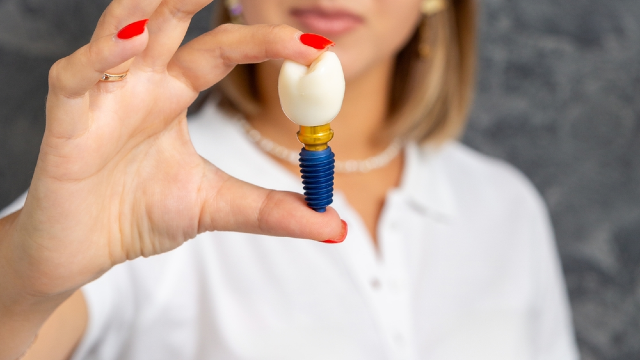
Patients researching Ankylos implants Korea often start by comparing fixture brand names on clinic websites, hoping to find a single manufacturer that ensures long-term dental implant stability. In clinical practice, however, an implant fixture does not function in isolation. Every implant system is an engineered ecosystem of macro-thread geometry, surface topography, internal implant-abutment connection tolerances, torque-calibrated prosthetic drivers, digital scan bodies, and custom abutment interfaces. How predictably those components perform in a patient's jawbone depends directly on the surgeon's cumulative familiarity with that specific system's drilling protocol, depth-positioning rules, and prosthetic load distribution.
Choosing an experienced Ankylos dental implant dentist means looking beyond brand marketing to examine how a clinician integrates a specific fixture platform into 3D diagnostic planning, guided surgery, custom prosthetic fabrication, and long-term maintenance. At Harue Dental Clinic in Gangnam-gu, Seoul—established in 1995 and led by Director Dr. Hanna Lee—the Ankylos implant system serves as a core surgical and prosthetic platform across single-tooth restorations, navigation-guided placements, and full-arch reconstructions. This guide examines Dr. Hanna Lee Ankylos workflows, explains how implant-system engineering interacts with operator experience, and outlines how international patients can transparently evaluate a dentist's academic roles and clinic-stated industry advisory relationships.
The Bottom Line
- Operator familiarity governs system performance: With Ankylos implants Korea, bone preservation and mechanical stability depend on how accurately the dentist executes subcrestal placement depth, progressive thread preparation, and conical abutment seating—not on the fixture label alone.
- Integrated surgical and prosthetic workflows: At Harue Dental Clinic, Dr. Hanna Lee pairs the Ankylos system with 3D volumetric imaging, computer-guided navigation surgery (introduced in 2002), patient-specific custom titanium abutments, and in-house CAD/CAM zirconia crowns.
- Transparent disclosure of academic and industry relationships: Dr. Hanna Lee serves as an Adjunct Professor in the Department of Implant Dentistry at The Catholic University of Korea Graduate School of Dentistry and as an Osstem research advisor, while clinic records also note an Ankylos clinical research partner 2008 designation and an Asian advisor role for the Ankylos system that patients can verify directly during consultation.
- Long-term serviceability for cross-border patients: Selecting a widely documented implant platform with standardized digital scan bodies and detailed component records helps U.S. patients receive informed follow-up care in Seoul and at home.
Why Implant-System Familiarity Outweighs Brand Marketing Alone
When patients search online for which implant brand fits their dental needs, consumer forums often rank manufacturers as if the titanium screw itself performs the surgery. Peer-reviewed research indexed on PubMed shows instead that marginal bone stability, primary mechanical stability, and prosthetic survival depend on the interaction between host bone biology, osteotomy precision, and the biomechanics of the implant-abutment interface.
An implant system experience dentist understands that no two platforms behave identically during osteotomy preparation or torque application. Switching casually between unfamiliar systems introduces variables at every stage:
- Osteotomy Drill Geometry and Bone Compaction: Different implant systems use distinct drill tapers and sequences depending on whether alveolar bone is dense mandibular cortical bone or softer maxillary cancellous bone. A clinician who has placed thousands of fixtures within a specific system calibrates drilling to achieve primary stability without over-compressing surrounding trabeculae.
- Apico-Coronal Depth Positioning: Some designs require bone-level placement flush with the crest, whereas conical-connection platform-switched systems are engineered for subcrestal positioning. Placing a subcrestal fixture too shallowly can expose collar threads, while placing a crestal design too deeply can trigger bone remodeling.
- Implant-Abutment Connection Mechanics: As documented in PubMed studies on internal hexagonal versus internal conical implant-abutment connections, interface geometry dictates how chewing forces transfer into bone and how effectively the junction resists micro-movement and bacterial translocation.
- Prosthetic Indexing and Custom Abutment Seating: Every platform has specific internal indexing geometry, scan-body tolerances, and screw preload torque values. Familiarity with those tolerances prevents rotational misfit when seating custom titanium abutments and zirconia crowns.
| Clinical Dimension | Casual Multi-Brand Switching | Dedicated System Experience | Patient Impact |
|---|---|---|---|
| 3D Virtual Planning | Generic library approximations for fixture dimensions | Exact digital libraries matched to drill sleeves and bone thresholds | Protects the inferior alveolar nerve, sinus, and adjacent roots |
| Osteotomy & Torque | Standardized drilling regardless of thread compaction | Calibrates drill sequence and insertion torque to thread profile | Supports primary stability in immediate-loading or graftless cases |
| Abutment Interface | Defaults to prefabricated stock abutments | Custom titanium abutments engineered for the conical interface | Promotes a stable soft-tissue seal and balanced bite forces |
| Component Inventory | May require ordering unfamiliar screws or drivers | Full on-site inventory of drivers, scan bodies, and torque wrenches | Streamlines short-trip timelines and prevents delivery delays |
The Ankylos Implant System Explained: Engineering Principles in Clinical Practice
Having the Ankylos implant system explained in clinical terms shows why system-specific familiarity matters during surgery and restoration. Developed in Germany, the Ankylos platform centers on three biomechanical principles:
1. Conical TissueCare Connection and Platform Switching
Rather than a flat butt-joint where the abutment meets the outer implant rim, the Ankylos design pairs a precision internal conical connection with an inward horizontal offset called platform switching. Because the abutment is narrower than the implant shoulder at the interface, the prosthetic junction shifts inward away from the crestal bone perimeter.
In vitro and clinical studies indexed on PubMed evaluating bacterial translocation, microgap formation, and bacterial colonization at conical implant-abutment interfaces show that a friction-locked conical taper minimizes micromotion during mastication and limits microgap bacterial ingress. Combined with subcrestal placement, this geometry leaves room over the implant shoulder for a stable collar of connective tissue and crestal bone.
2. Progressive Macro-Thread Design
The external macro-geometry of an Ankylos fixture uses a progressive thread profile whose depth and contour change gradually from the cervical neck toward the apex. Instead of concentrating biting stress at the cortical crest, progressive threads transfer functional loads deeper into cancellous bone. PubMed research on implant macro-design and alveolar ridge morphology in static guided surgery highlights that understanding thread engagement is vital when placing fixtures into extraction sockets, narrow ridges, or full-arch cases.
3. Restorative Flexibility and Indexed Prosthetic Seating
In single-tooth and multi-unit restorations, repeatable abutment orientation is essential. An Ankylos dental implant dentist uses indexed conical components and digital scan bodies to capture the 3D position of the submerged fixture, allowing the laboratory to mill a custom titanium abutment that seats cleanly without compressing the peri-implant mucosa.
How Dr. Hanna Lee Integrates the Ankylos System at Harue Dental Clinic
At Harue Dental Clinic, implant care follows a single-doctor model rather than splitting surgical and prosthetic steps across separate offices. Director Dr. Hanna Lee—who graduated second in her class from Pusan National University College of Dentistry in 1994 and completed clinical implant surgery education at the University of Berlin in Germany as well as graduate implantology education at The Catholic University of Korea—personally performs 3D diagnostics, surgical placement, prosthetic design, and follow-up checks.
With 30+ years of clinical experience and 90,696 cumulative implants placed (including 3,000+ full-arch implant rehabilitations as of September 2025 in clinic records), Dr. Hanna Lee Ankylos workflows apply system-specific familiarity across seven documented clinical categories:
| Procedure Category | Role of the Ankylos System | Integrated Diagnostic & Prosthetic Workflow |
|---|---|---|
| Front Tooth Implants | Subcrestal placement and platform-switched soft-tissue support | 3D bone analysis, custom titanium abutments, and translucent zirconia crowns |
| Navigation-Guided Surgery | Virtual fixture placement within 3D CBCT datasets | Computer-guided navigation (introduced in 2002; registered as "Navigation Implant" with KIPO in 2007) |
| Implants Without Bone Grafting | Engages native bone volume with progressive threads | Evaluates bone height, width, and density in 3D to avoid unnecessary grafts |
| All-on-4 Full-Arch Implants | Anchors a full-arch bridge on four angled and axial fixtures | Index-guided surgical templates with custom titanium abutments and CAD/CAM zirconia bridges |
| All-on-6 Full-Arch Implants | Distributes chewing forces across six fixtures | Enhances anterior-posterior load distribution for comprehensive bite reconstruction |
| Immediate-Loading Implants | Achieves primary stability for provisional or restorative teeth | Bilateral load-balance protocol during a 2-to-3-month guided healing window |
| Bite Reconstruction | Coordinates implant pillars with crowns and laminates | Digital occlusal equilibration and in-house CAD/CAM milling (CEREC introduced in 2007) |
Navigation-Guided Planning and Primary Stability
Precision with a conical-connection system starts before surgery. PubMed studies analyzing CBCT-guided surgical guides and digitally guided immediate placement protocols show that 3D trajectory control is vital for achieving planned depth and angulation. At Harue Dental Clinic, Dr. Hanna Lee uses 3D volumetric imaging and computer-guided navigation to map the depth, angulation, and cortical engagement of each Ankylos fixture relative to the mandibular canal and maxillary sinus floor.
Custom Titanium Abutments vs. Stock Abutments
Even a well-positioned Ankylos fixture can develop soft-tissue irritation or uneven occlusal stress if restored with a cylindrical stock abutment. Natural tooth roots emerging through the gingiva are ovoid or triangular in cross-section. In every implant restoration at Harue Dental Clinic, Dr. Lee uses custom titanium abutments rather than stock abutments. Digitally milled to match the patient's gingival margin and emergence angle, each custom titanium abutment supports the peri-implant tissue cuff beneath an in-house fabricated zirconia crown.
Bilateral Load Balance in Immediate-Loading Cases
For edentulous patients undergoing immediate-loading full-arch rehabilitation—a concept evaluated in PubMed studies on edentulous jaw rehabilitation with immediate functional loading—system familiarity is critical during early healing. When primary stability meets clinical criteria, Harue Dental Clinic's protocol maintains bilateral load balance across the arch during the 2-to-3-month guided healing period, preventing unilateral tipping forces while osseointegration progresses.
Understanding Academic Credentials, Research Roles, and Industry Partnerships
International patients evaluating a high-volume implant clinician abroad frequently encounter academic titles, society memberships, and manufacturer advisory roles. A transparent review separates university appointments from clinic-stated manufacturer partnerships and explains what each designation signifies.
1. Academic Appointments and Professional Society Memberships
In Harue Dental Clinic's institutional profile, Dr. Hanna Lee's academic and professional affiliations include:
- Adjunct Professor, Department of Implant Dentistry, Graduate School of Dentistry, The Catholic University of Korea
- Member, Korean Academy of Oral and Maxillofacial Implantology (KAOMI)
- Member, Korean Association of Orthodontists (KAO)
- Member, American Academy of Cosmetic Dentistry (AACD)
- Lecturer, Korean Academy of Computerized Restorative Dentistry ("Laminate by CEREC System")
An adjunct professorship in a university graduate department of implant dentistry reflects active involvement in clinical education, while society memberships reflect ongoing engagement with peer communities in implantology, orthodontics, and esthetic dentistry.
2. Evaluating Manufacturer Advisory and Research Partner Designations
Clinicians with extensive surgical volume often collaborate with implant manufacturers as clinical evaluators or advisors. In Harue Dental Clinic's foundation records, three manufacturer-related designations appear:
- Osstem research advisor: Listed in the clinic's doctor credential profile, Dr. Hanna Lee serves as a Research Advisor for Osstem Implant.
- Ankylos clinical research partner 2008: Clinic profile statements record a designation as a Dentsply Friadent Ankylos implant clinical research partner clinic in 2008.
- Asian advisor for the Ankylos implant system: Clinic profile statements also describe Dr. Hanna Lee as an Asian advisor for the Ankylos implant system.
For patients researching Dr. Hanna Lee Ankylos experience, two points of clinical transparency apply:
- Source and Verification of Advisory Claims: While Dr. Lee's Osstem Implant Research Advisor role and university adjunct professorship appear in her primary curriculum vitae table, the 2008 Ankylos clinical research partner clinic designation and Asian advisor description are recorded in the clinic's profile statement bank. Patients who wish to inspect documentation of historical research partnerships or advisory roles should request verification directly during their consultation.
- Clinical Experience vs. Commercial Endorsement: An advisory or research partnership with an implant manufacturer indicates deep hands-on familiarity with that platform's surgical kits, connection geometry, and prosthetic workflows—spanning both European (Ankylos) and Korean (Osstem) systems. However, a manufacturer relationship is an industry collaboration, not an independent regulatory certification or proof that one brand is universally superior for every patient.
| Role Category | Designation in Clinic Profile | What It Indicates | What It Does Not Mean |
|---|---|---|---|
| University Academic Role | Adjunct Professor, Dept. of Implant Dentistry, Graduate School of Dentistry, The Catholic University of Korea | Involvement in graduate-level implant dentistry education | Does not replace an individualized 3D CBCT exam for your specific jawbone |
| Professional Societies | Member of KAOMI, KAO, and AACD | Active participation in implant, orthodontic, and esthetic dental societies | Society membership is distinct from specialty board certification |
| Korean Manufacturer Role | Osstem research advisor (Research Advisor, Osstem Implant) | Direct familiarity with Korean implant R&D and clinical handling | Does not restrict the clinic to a single domestic brand |
| Clinic-Stated Ankylos Roles | Ankylos clinical research partner 2008 & clinic-stated Asian advisor role for the Ankylos system | Long-standing clinical focus and case volume using the Ankylos platform at Harue Dental Clinic | Clinic-stated historical/advisory relationships rather than government or board certifications |
How to Evaluate Whether an Implant System and Clinic Fit Your Case
Rather than asking a search engine which implant brand is superior in the abstract, U.S. patients traveling to Seoul can ask five system-focused questions during consultation:
- How does my 3D bone morphology match the proposed implant design? Ask the dentist to review your 3D CBCT scan on screen, showing bone height, ridge width, cortical thickness, and nerve or sinus boundaries. Whether a subcrestal conical fixture like Ankylos is recommended should follow from your anatomy.
- Who performs each surgical and prosthetic step? Confirm that the dentist who plans your 3D navigation trajectory also places the fixture, designs the custom titanium abutment, and verifies the bite of your zirconia crown. At Harue Dental Clinic, Dr. Hanna Lee oversees every stage personally under a 19-step sterilization protocol.
- Will my restoration use a custom titanium abutment or a stock abutment? Confirm in writing that your crown will be supported by a custom titanium abutment milled for your gingival emergence profile rather than a prefabricated cylinder.
- What are my healing timelines and contraindicating factors? Uncontrolled systemic conditions (such as poorly controlled diabetes), active periodontal infection, heavy smoking, or low primary bone stability require preliminary stabilization, bone grafting, or staged healing rather than immediate loading.
- What component records will I take home to the United States? Request an implant record listing the manufacturer (e.g., Ankylos), fixture diameter and length, tooth site, abutment type, screw torque value, and radiographs. You can also browse clinical cases in the before-and-after gallery or use the contact page to arrange English-language assistance with coordinator Jeon Jin-mi before your visit.
Frequently Asked Questions
What makes the Ankylos implant system different from flat-platform implants?
When having the Ankylos implant system explained, the core engineering distinction is its precision conical implant-abutment connection paired with platform switching and progressive external threads. Shifting the abutment-fixture junction inward and using a tight friction taper minimizes micromotion and microgap bacterial colonization while supporting stable crestal bone and soft tissue around the implant neck.
Why does a dentist's experience with a specific implant system matter more than the brand name alone?
Every implant system has distinct osteotomy drill sequences, depth rules (subcrestal versus crestal positioning), and torque specifications. An Ankylos dental implant dentist who has placed thousands of fixtures within that ecosystem knows how to calibrate drilling to your bone density, position the shoulder beneath the bone crest, and seat custom titanium abutments without mechanical misfit.
What do Dr. Hanna Lee's Osstem research advisor and clinic-stated Ankylos roles mean for patients?
Dr. Hanna Lee's profile lists her role as an Osstem research advisor alongside her position as an Adjunct Professor at The Catholic University of Korea Graduate School of Dentistry, while clinic credential statements note an Ankylos clinical research partner 2008 designation and an Asian advisor role for the Ankylos system. These roles reflect deep practical familiarity across European and Korean implant platforms, and Harue Dental Clinic transparently distinguishes industry advisory roles from government or board certifications.
Does Harue Dental Clinic use stock abutments or custom titanium abutments with Ankylos implants?
Harue Dental Clinic uses custom titanium abutments rather than stock abutments across its implant restorations. Each custom titanium abutment is digitally milled to match your gumline contour and implant angulation, then paired with an in-house CAD/CAM zirconia crown to support healthy peri-implant tissue and balanced bite forces.
Can an Ankylos dental implant be maintained by a dentist in the United States after I return home?
Yes, when accompanied by component documentation. Because Ankylos (Dentsply Sirona) is an internationally distributed platform with standardized drivers and scan bodies, U.S. dentists can perform routine radiographic checks and hygiene maintenance using your written implant record detailing fixture dimensions, connection type, and abutment specifications.
How can I schedule an English-language consultation with Dr. Hanna Lee in Seoul?
Contact Harue Dental Clinic at 41-11, Gangnam-daero 162-gil, Gangnam-gu, Seoul by calling +82 2 543 0037 (or +1 208-825-7756), emailing info@haruedentalclinic.com, or submitting a website inquiry. Because appointments are reservation-based, confirm English coordinator availability (including coordinator Jeon Jin-mi) in advance for your visits.
Clinical Attribution: Medically reviewed by Dr. Hanna Lee, DDS, MSD, PhD (D.D.S., M.S., Ph.D.), Director at Harue Dental Clinic in Gangnam-gu, Seoul, and Adjunct Professor in the Department of Implant Dentistry at The Catholic University of Korea Graduate School of Dentistry.
This article is for informational purposes only and is not a self-diagnosis tool or a substitute for a clinical examination and personalized treatment plan from a licensed dentist.
More Articles
Continue reading our clinical guides.